Then and now, 80 years of memories in Hong Kong and Asia
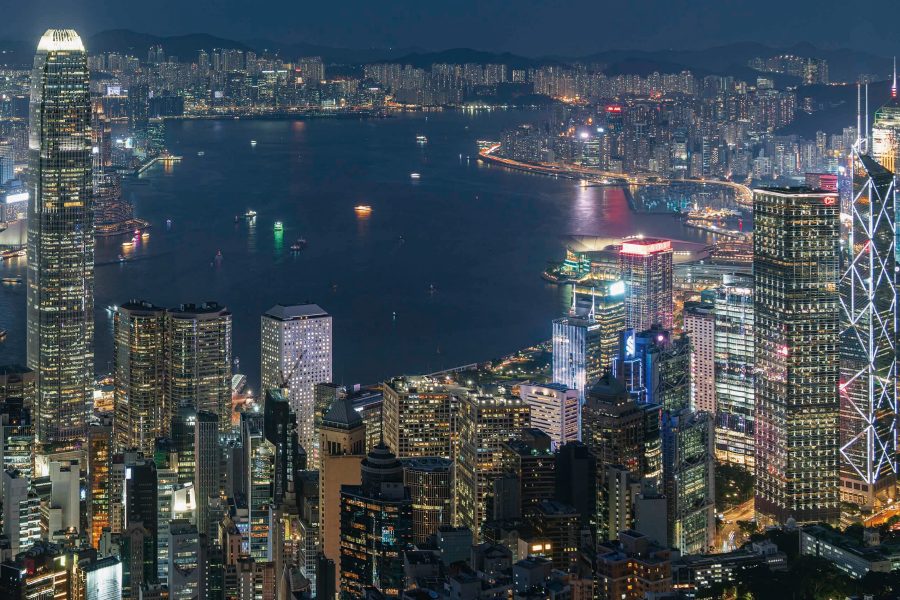
Just as Cathay Pacific has evolved from a young airline operating a single aircraft to a global airline group serving more than 100 destinations worldwide, Hong Kong has grown alongside it. Across eight decades, both have expanded their horizons, connecting our city and the Chinese Mainland to the world.

Credit: Lionel Green/Getty Images
That journey is captured in a remarkable set of historic photographs of Hong Kong and Asia published in the former Discovery magazine (relaunched as Cathay in 2023). The first images were taken in 1946 by photographer Frank Owen. Fifty years later, as Cathay marked its golden anniversary, freelance photographer Neil Farrin returned to the same locations. These atmospheric evocations of a bygone era demonstrate how rapidly and how regularly Hong Kong remakes itself. “Fifty years would be a long time anywhere in the world,” reflects Farrin. “In Hong Kong, five years is forever.”
For Cathay’s 80th year, Cathay staff photographer Elvis Chung followed in their footsteps, seeking out those same vantage points once again. “I like the street vibe in the oldest photos,” says Chung. “They have a very special character. I never got to see Hong Kong during those times, so I enjoy them.”
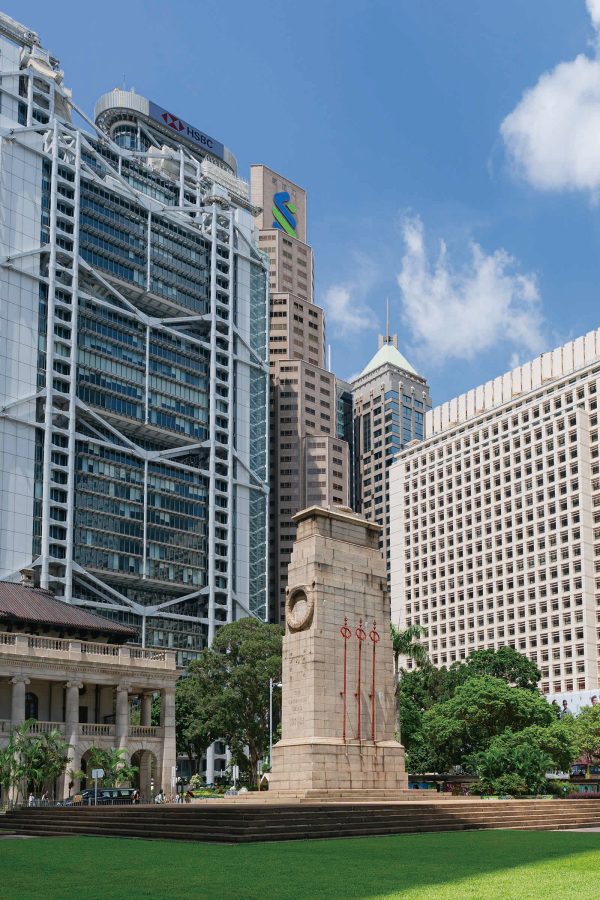
Credit: Elvis Chung

Credit: Frank Owen
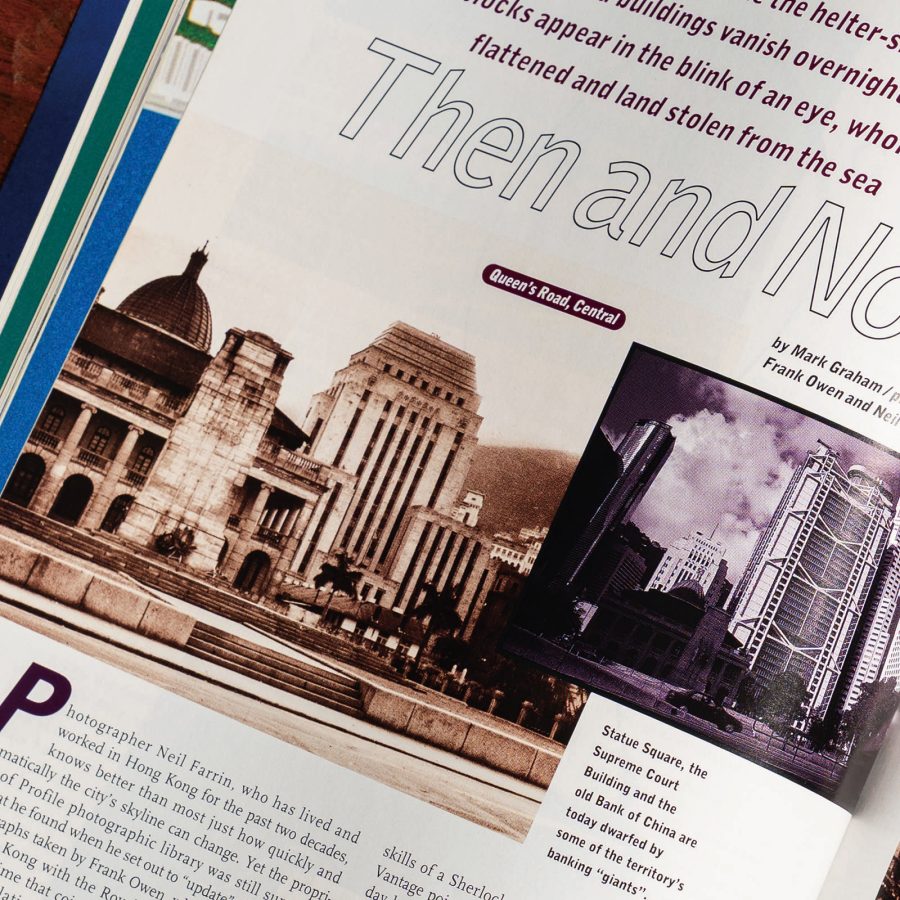
Credit: Elvis Chung
Central’s skyline across eight decades
At Statue Square, the open skyline of 1946 had given way to a cluster of towers by 1996, with the Cenotaph and former Legislative Council Building sitting beneath an increasingly vertical Central. Since then, the Cheung Kong Center has arrived.
Along Queen’s Road Central, the businesses, signs and street life have shifted with the decades, yet much of the district remains familiar to anyone who knew it in the 1990s. But the scene bears little resemblance to the low-rise thoroughfare captured in 1946.
The passage of time is subtler on Des Voeux Road Central. Many of the buildings seen in 1996 still stand, along with the pedestrian overpass. One familiar sight appears in every era: the tram. This 122-year-old system continues to rumble through, linking both ends of Hong Kong Island.

Credit: 2026/Getty Images

Credit: Neil Frarin

Credit: Frank Owen
Harbour reclamation and the view from Victoria Peak
Our 1996 article noted the narrowing of the harbour, and one of the viewpoints has now completely changed. Central’s iconic Ferris wheel dominates the foreground, though many buildings behind are unchanged – in dramatic contrast to 1946’s bare hillsides and neoclassical colonnades.
“The reclamation around Central Pier was the hardest photo to get,” says Farrin. The same was true for Chung: “That area has changed so much over the last 20 years,” he says. “There are so many new tall buildings now, making it almost impossible to get the same view.”
From Victoria Peak, Hong Kong’s growth can be traced across the harbour. Bare hills dominated the scene in 1946. By 1996, skyscrapers filled much of the vista. Since then, landmarks including IFC have added a further dimension to the panorama.

Credit: Elvis Chung


Villa Haw Par
Few locations illustrate the city’s capacity for renewal more vividly than Villa Haw Par in Tai Hang, once home to the surreal Tiger Balm Garden, named after the herbal ointment manufactured by its founder, Aw Boon Haw. Our 1996 caption wondered what the entrepreneur and philanthropist would have made of the high-rises surrounding his creation. He might be more surprised today to find that the gardens have made way for one, although the neighbouring heritage mansion remains and is reopening as a cultural embassy this autumn.

Credit: deejpilot/Getty Images
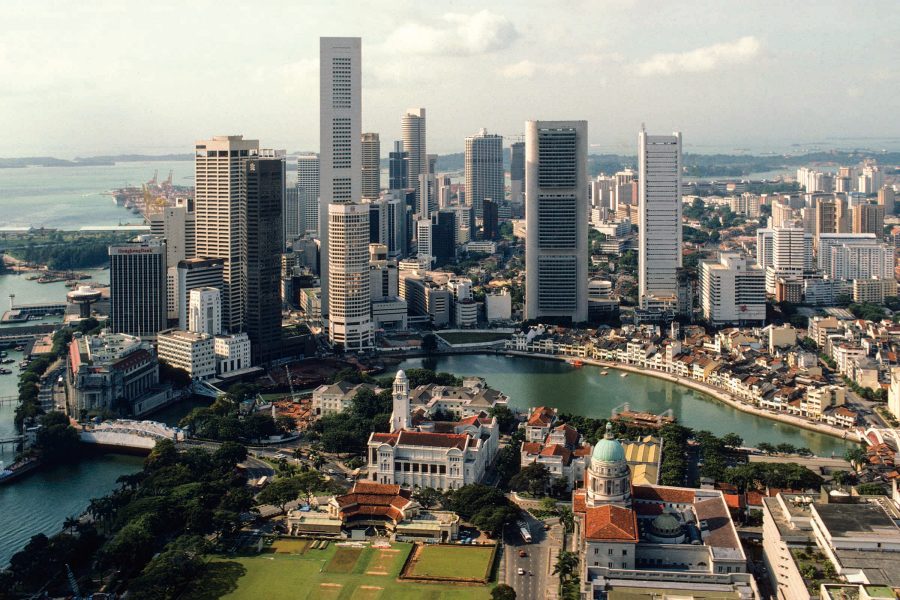
Credit: Forrest Anderson/Getty Images

Credit: chingyunsong/Getty Images
Asia’s world cities
Asia’s transformation over recent decades has been remarkable. From emerging commercial centres to global economic powerhouses, cities across the region have evolved at extraordinary speed.
In Singapore, Orchard Road was once lined with traditional shophouses, featured in the pages of our early magazine, while a scattering of high-rise office buildings and hotels hinted at the city’s growing ambitions, a prelude to the shopper’s paradise of today.
By 1985, attention had widened to the city as a whole, with a focus on progress that remains central to Singapore today, a city where dozens of hotels have opened in the past year alone.

Credit: Elvis Chung
Kuala Lumpur, which we began flying to in the ’60s, is another city that has set a benchmark for continued evolution. Our article from the early ’70s emphasised the city’s relatively modest size, with a population of nearly one million. Recently built infrastructure included Subang International Airport, while the arrival of supermarkets and shopping complexes was noteworthy enough to mention. The Petronas Towers, opened in 1999, were still decades away. By the time we returned in 2006, the focus had shifted to a city with a thriving cultural and retail scene.

Credit: Weiquan Lin/Getty Images

Credit: Elvis Chung

Credit: Elvis Chung
The Chinese Mainland and Greater Bay Area transformation
Nowhere in Asia has developed as rapidly as the Chinese Mainland. Our scheduled passenger flights to Xiamen in 2005 landed in a Fujian coastal city that many visitors would still recognise. The island of Gulangyu remains a cultural hub, Nanputuo Temple still draws tourists and the port remains one of the Chinese Mainland’s busiest. What’s changed over the last 21 years? Xiamen has strengthened its position as a centre for science, technology and innovation.
Southern Guangdong, meanwhile, shows how quickly a whole region can advance. In 2004, the Pearl River Delta, as it was then called, was home to about 40 million people. Today, it’s known as the Guangdong-Hong Kong-Macao Greater Bay Area, with a population approaching 90 million and an economy worth more than US$2 trillion.
In our 2004 feature, Shenzhen offered a glimpse of changes that would reshape global industry. Companies such as BBK Electronics, then known for DVD players and other electronics, reflected the growing ambitions of Chinese manufacturers and their increasing presence in international markets.
And in May 2004, Sands Macau had recently opened with a casino space the size of two football pitches, while Cotai was still emerging from reclaimed land.
The true scale of what lay ahead was only beginning to emerge into view.