
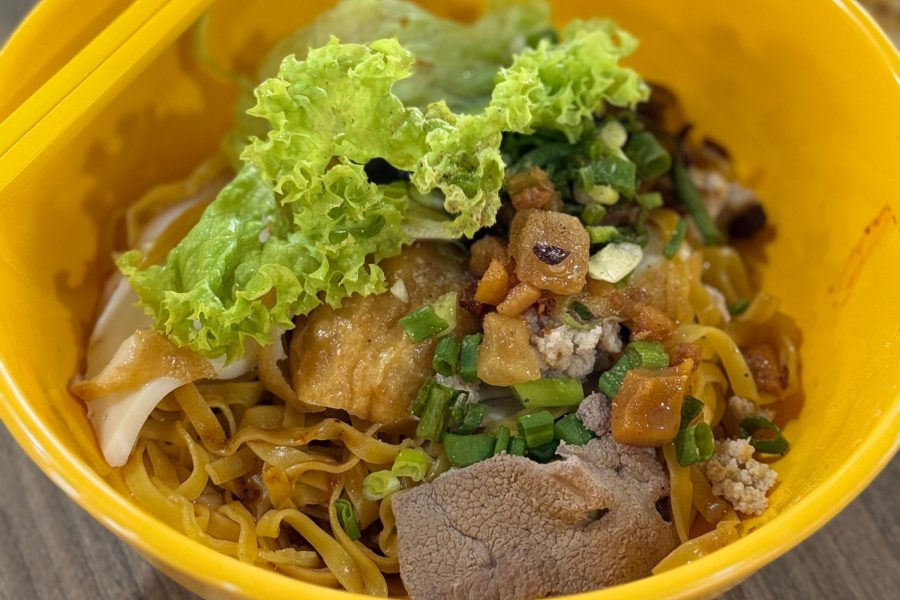
The bowl of flat egg noodles is masterfully tossed in soy sauce, sambal chilli, garlic and lard. Accompanying in another bowl is pork bone broth, inspired by Japanese tonkotsu and enhanced with chicken feet and other collagen-rich ingredients.
Singapore hawker centres at a glance
| Hawker centre | Area | Famous for |
| Chinatown Complex Food Centre | Chinatown | Chicken rice, noodles and Chinese food |
| Maxwell Food Centre | Chinatown | Chicken rice, porridge and local dishes |
| Old Airport Road Food Centre | Geylang | Char kway teow, hokkien mee and satay |
| Lau Pa Sat | CBD | Satay, local dishes and international food |
| Tiong Bahru Market | Tiong Bahru | Chwee kueh, wonton noodles and local favourites |
| Amoy Street Food Centre | CBD | Traditional and contemporary hawker food |
| Newton Food Centre | Newton Circus | Fishball noodles and seafood |


Credit: Marklin Ang

Bursting with bold flavours, this is young hawker couple Chelsea Goh and Lam Geng Han’s take on the Singaporean street food classic bak chor mee, minced meat noodles. Lam was inspired by his memories of frequenting an old noodle shop when he was younger, so he and his wife decided to launch their stall – No. 25 Minced Meat Noodle – in Bukit Merah to share that nostalgia with customers.
Lam and Goh’s enterprise is just a small slice of Singapore’s hawker culture, which encapsulates the Lion City’s rich heritage. Offering diverse bites at affordable prices, hawker centres are where a multi-cultural cross-section of society gathers to feast on local fare in a communal setting. So central to the Singapore experience are these dining halls that in recent decades, they have also become bucket-list destinations for foodie travellers.
“A hawker centre is a magical place. The more effort you spend discovering its hidden gems, the more delicious treasures are revealed,” says Singapore-based culinary consultant Jeremy Nguee. “No two people will have the same experience, nor would two locals recommend the same stalls to order from. To survey the options on offer is to glimpse all at once the breadth of Asia gathered in Singapore over time in one place.”
The best hawker centres in Singapore
From historic food centres to bustling markets in the heart of the city, Singapore's hawker centres offer some of the best hawker food in Singapore.
Credit: Getty Images
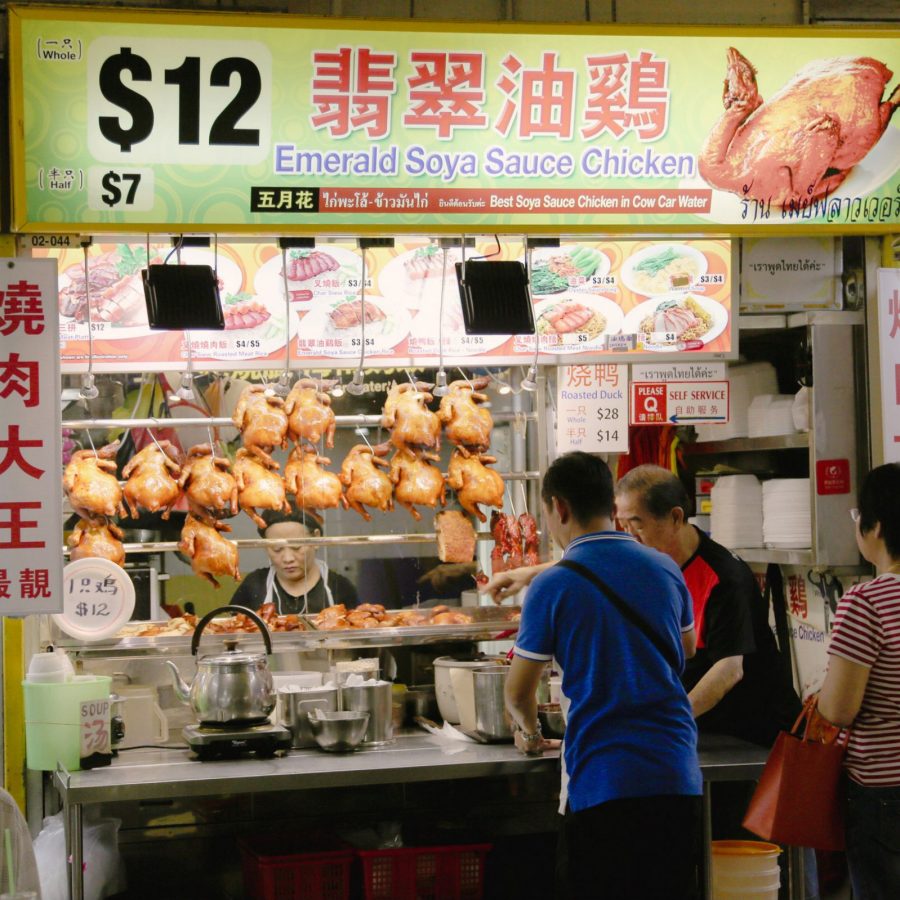
Chinatown Complex Food Centre
One of Singapore’s largest hawker centres, Chinatown Complex Food Centre is home to hundreds of stalls serving everything from traditional local dishes to modern takes on hawker classics. Its central location also makes it a convenient stop when exploring Chinatown.
Maxwell Food Centre
Maxwell Food Centre is one of Singapore’s best-known hawker centres, popular for local favourites including chicken rice, porridge, fish soup and fresh fruit juices. It is close to Chinatown and makes an easy addition to a sightseeing itinerary.
Old Airport Road Food Centre
A long-standing favourite among locals, Old Airport Road Food Centre is known for its wide variety of hawker food, including char kway teow, hokkien mee, satay and rojak. Its extensive choice makes it a good option when travelling with a group that can't agree on what to eat.
Credit: Getty Images
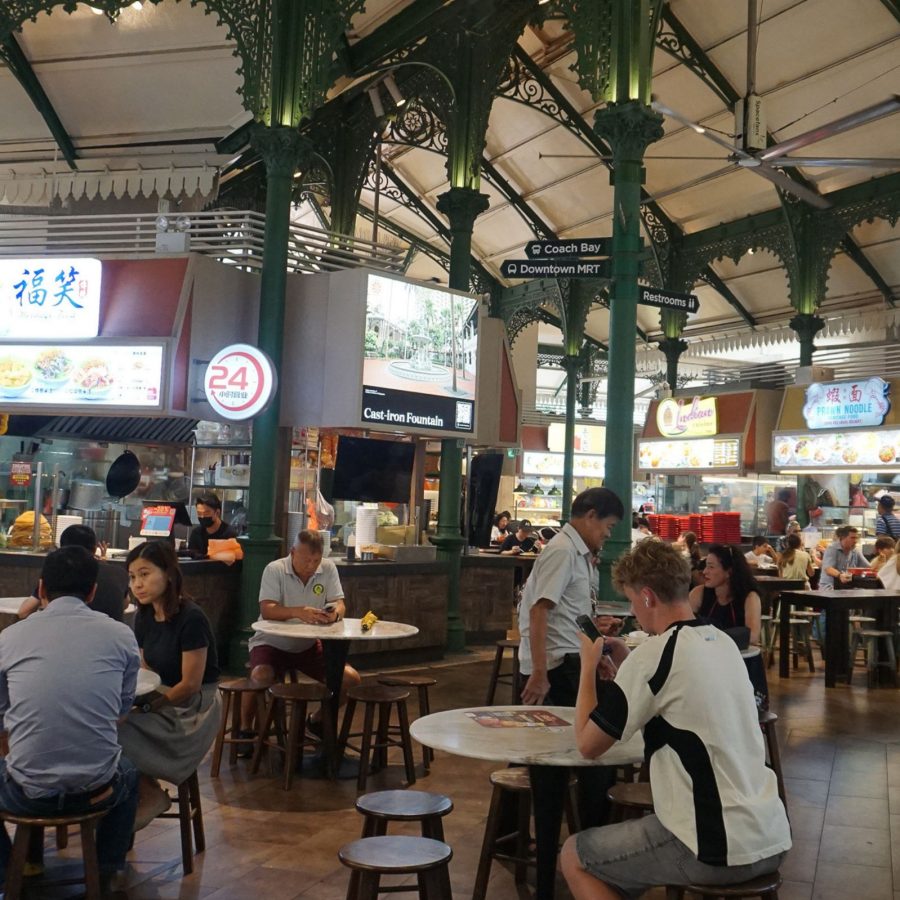
Lau Pa Sat
Set in the Central Business District, Lau Pa Sat is one of Singapore’s most recognisable hawker centres. Its Victorian-era architecture adds to the experience, while the surrounding business district makes it a convenient choice for visitors looking for Singapore street food in the city centre.
Tiong Bahru Market
Tiong Bahru Market combines a traditional wet market with a popular hawker centre. Expect local favourites such as chwee kueh, wanton noodles, roast meats and other Singaporean dishes, making it a good introduction to the city’s food culture.
Credit: Getty Images
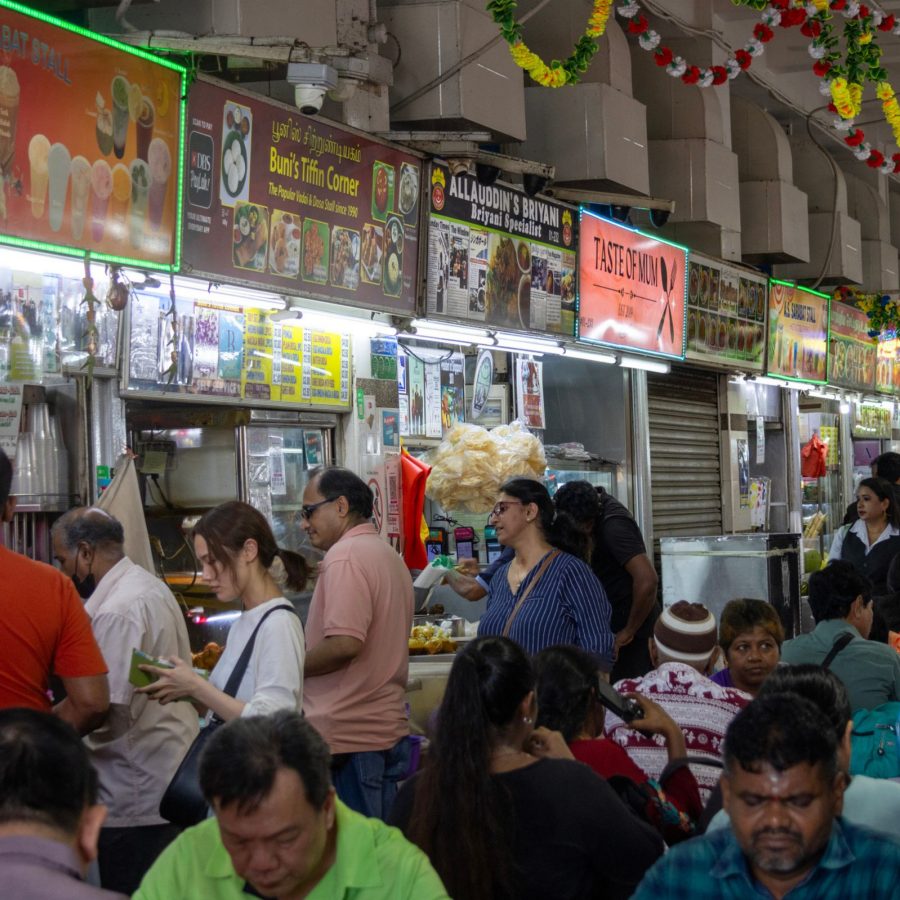
Tekka Centre
Located in Little India, Tekka Centre is a great place to experience Singapore’s Indian and South Asian culinary influences. Its hawker stalls serve dishes including biryani, roti prata and South Indian favourites alongside other local specialities.
Amoy Street Food Centre
Located in Singapore’s Central Business District, Amoy Street Food Centre is a convenient lunchtime stop with a mix of traditional and contemporary hawker stalls. It is also where Mad Roaster, featured in this article, operates.
What to eat at a Singapore hawker centre
Credit: Danny Santo
Credit: Joel Lim Photography
Singapore’s hawker centres are a great place to sample the city’s diverse food culture at affordable prices. Look out for these Singapore food favourites:
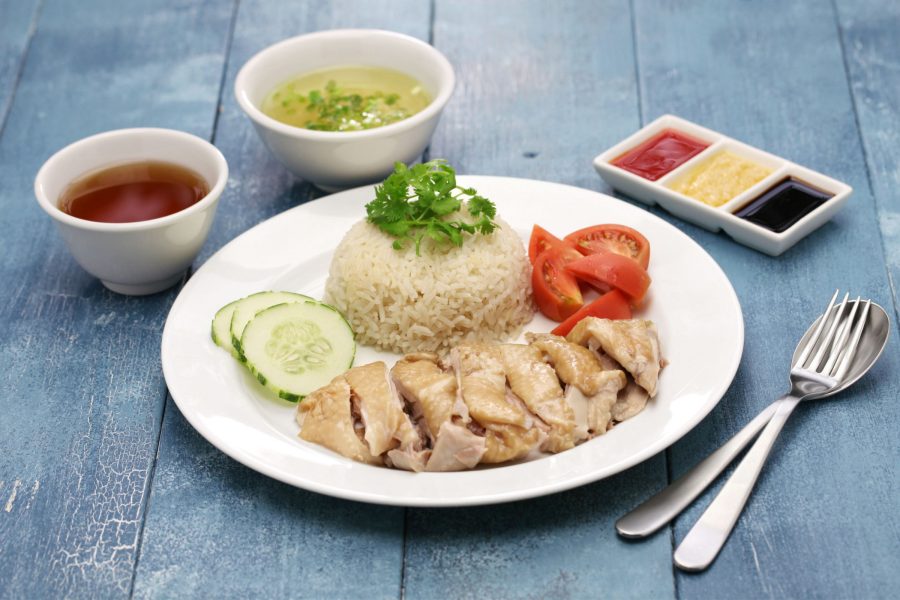
- Chicken rice – poached or roasted chicken served with fragrant rice, chilli sauce and soy-based condiments.
- Laksa – a spicy noodle soup with a rich, coconut-based broth.
- Char kway teow – stir-fried flat rice noodles cooked with ingredients such as prawns, Chinese sausage, egg and bean sprouts.
- Bak chor mee – minced meat noodles tossed with noodles, vinegar, chilli and savoury sauces.
- Hokkien mee – stir-fried noodles cooked with seafood and a flavourful stock.
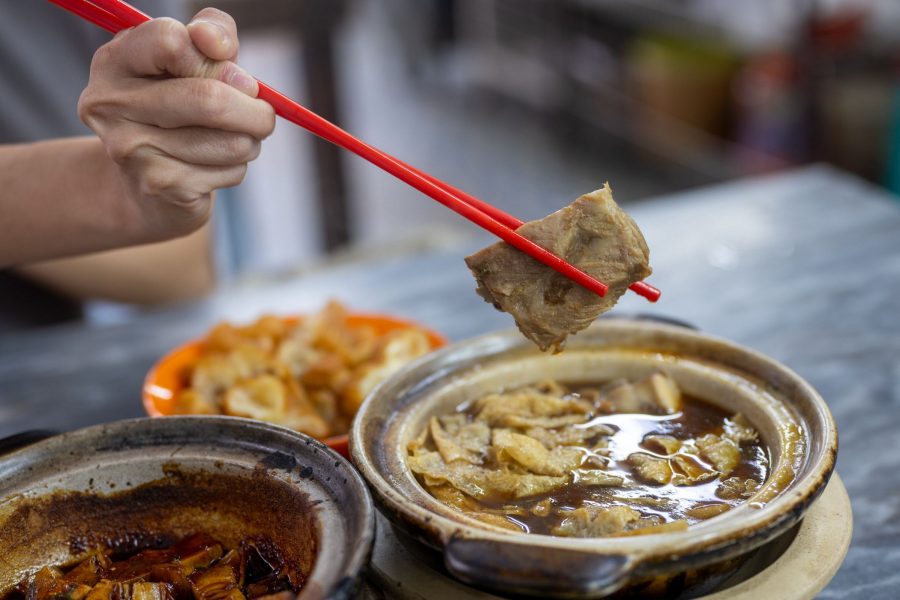
- Bak kut teh – a peppery pork-rib soup traditionally served with rice and other accompaniments.
- Carrot cake – a savoury fried dish made from steamed rice cakes and eggs; despite its name, it contains no carrot.
- Satay – skewers of marinated meat grilled over charcoal and served with a peanut dipping sauce.
- Oyster omelette – a crispy, savoury omelette made with eggs, oysters and a starch-based batter.
- Kaya toast – toasted bread spread with sweet coconut-and-egg kaya, usually served with soft-boiled eggs and coffee or tea.
The new generation of hawkers
While Singapore’s tradition of community dining was inscribed on Unesco’s Intangible Cultural Heritage list in 2020, with the passing of time, an ageing generation of hawker stall owners is retiring. With fewer younger chefs and entrepreneurs willing to take up the mantle, the fear that hawker centres will one day cease to exist is slowly brewing.
But there’s still hope. Despite the gruelling work involved, business- and social media-savvy millennials are eschewing comfortable white-collar jobs to open their own hawker stalls which offer a new spin on the classics.

Credit: Danny Santo

Credit: Joel Lim Photography
At No. 25 Minced Meat Noodle, you’ll find an extra-labour-intensive version of bak chor mee, featuring ingredients prepared from scratch by Goh, a former accountant and flight attendant, and Lam, who used to be a sous chef at a Western fine-dining chain.
“With many of the pioneer hawkers leaving the industry, my husband felt the need to create something for the masses in Singapore while he still could,” says Goh. “Otherwise, where would we be able to find nice hawker food in the future?”
Playing a role in preserving Singapore’s hawker culture is a calling that drives those like Goh and Lam into the trade. But practical concerns of running a business, including rising rental costs and landlord issues, are obstacles for these young entrepreneurs. No. 25 has since resumed operations at the same Bukit Merah location, continuing to serve its modern take on bak chor mee.
To galvanise against such uncertainties, some new-generation hawkers have diversified and modernised. For instance, Elizabeth Chan has expanded her mother’s Nonya kueh (sweet and savoury South East Asian snacks made from rice) enterprise Kueh Ho Jiak to include catering services, online ordering and delivery. Such measures have extended the shop’s reach beyond its Chinatown and Tanjong Pagar brick-and-mortar outlets in Tanjong Pagar.
“Initial doubts about whether our customers would order from our website were quickly disproved by rising online sales,” says Chan. “These measures have helped improve and grow the business, even during tough times in the past couple of years.”
Social media smarts helped Jeevan Ananthan become an online sensation when he opened Lina Fishball Noodle in Toa Payoh with his wife, May Leena Krishnan. Their success enabled them to relocate to a bigger location in the same area, open a second outlet on the east side of Singapore, and establish a central kitchen within three years.
To ensure hawker centres remain attractive to younger diners through changing times and tastes, operators are adapting what they serve. Some unconventional establishments have entered the field to liven up the food and drinks selection. Thanks to the addition of craft beer stall Smith Street Taps , diners at the Chinatown Complex hawker centre can now pair their laksa, soup dumplings and fried noodles with a fancy ale.
Meanwhile, for Madeline Chan, a part-time lawyer and founder of speciality coffee chain Mad Roaster , setting up her first shop in the Amoy Food Centre made good business sense. “Being located in a hawker centre in the central business district allows us to sell more coffee compared to opening a standalone café,” she says.
Mad Roaster puts a modern spin on Singapore’s traditional coffee and tea drinks by brewing with an espresso machine – instead of the old-school way of mixing coffee grounds with hot water and straining the drink with a sock-shaped fabric filter.
Chan says, “Our method extracts a stronger tea or coffee flavour while retaining a familiar taste. This contributes to the preservation of hawker culture: our drinks have a multi-generational appeal.”
And indeed, it’s because of these fresh, hip takes on hawker fare that there’s renewed hope this food heritage can stand the test of time.
“The hawker centre as we know it today will continue to be a gathering place and a beacon of good food,” says Nguee. “What will remain unchanged is the ‘hawker’ spirit – a bold derring-do to try a path fraught with risk, fuelled by a passion for food and a love to serve others.”


Credit: Alex Soh
A slice of hawker centre history
Street peddlers of different ethnicities were already selling food along Singapore’s crowded streets as early as the 1800s. In the 1970s, the government established hawker centres as a way to address hygiene concerns and provide better facilities for both street food vendors and customers. Since then, hawker centres have become essential to Singapore’s food culture – affordable eats from the city and the region, all together under one roof.
Frequently asked questions about Singapore hawker centres
This article was originally published in January 2024 and updated in November 2026.