How Mid-Autumn Festival is celebrated across Asia
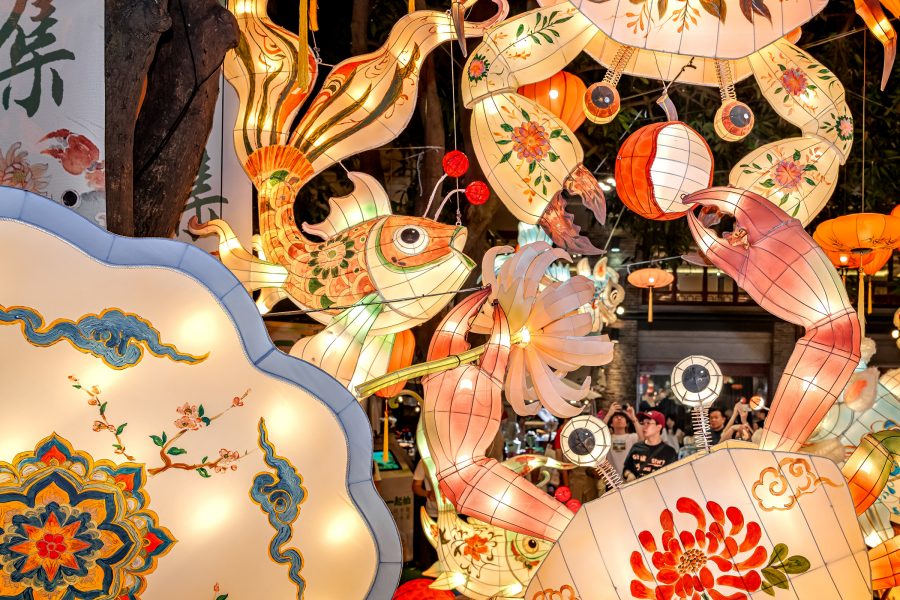
Mid-Autumn Festival is a major traditional holiday and one of the most auspicious dates on the lunar calendar, marking the full moon at the midpoint of the eighth lunar month. It’s an ancient harvest celebration observed widely across East and Southeast Asia – including the Chinese Mainland, South Korea and Vietnam – and diaspora communities worldwide.
This year, Mid-Autumn festival falls on 25 September. Whether you know it as Chuseok, Wan Wai Phra Chan or Tết Trung Thu, here’s a look at the different customs and festivities observed across the region – from hanging lanterns and making mooncakes to concerts and moon gazing.
Credit: Hong Kong Tourism Board
Credit: Hong Kong Tourism Board
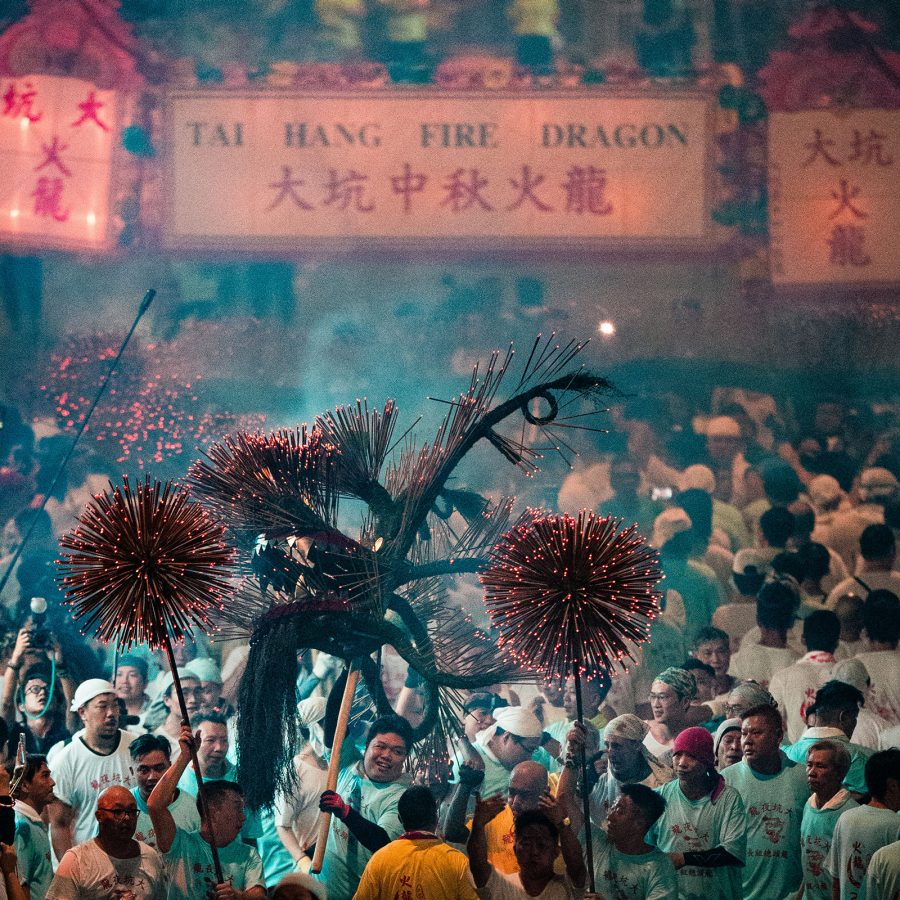
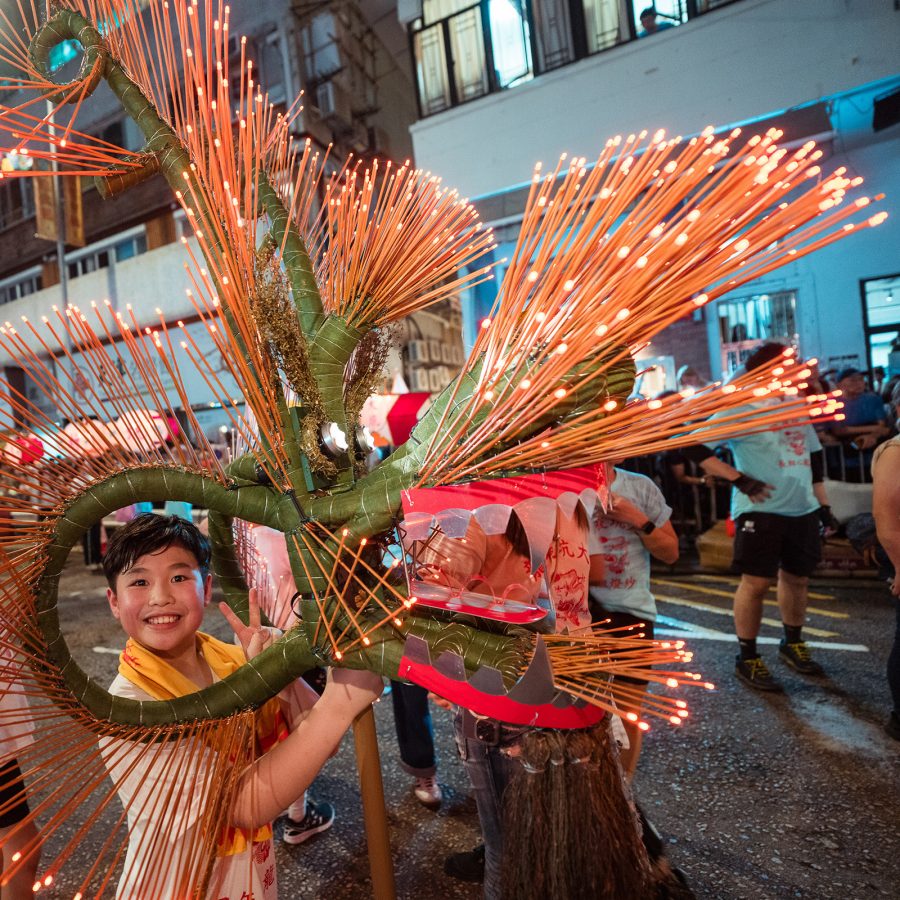
Hong Kong: Tai hang fire dragon dance
Inscribed onto China’s national list of intangible cultural heritage since 2011 , the century-old Tai Hang Fire Dragon Dance, which takes place from 24 to 26 September, is among Hong Kong’s most iconic Mid-Autumn festivities. For three consecutive nights, over 300 participants parade a 67-metre-long dragon lined with thousands of burning incense sticks through narrow neighbourhood streets.
A smaller, safer LED version led by student performers gives the procession an adorable community twist. Meanwhile, the carnival atmosphere is enriched with acrobatic and street performances, and incense sticks are distributed to eager spectators as a symbol of luck and prosperity.
Credit: Jong heung lee/Getty Images
Credit RUNSTUDIO/Getty Images
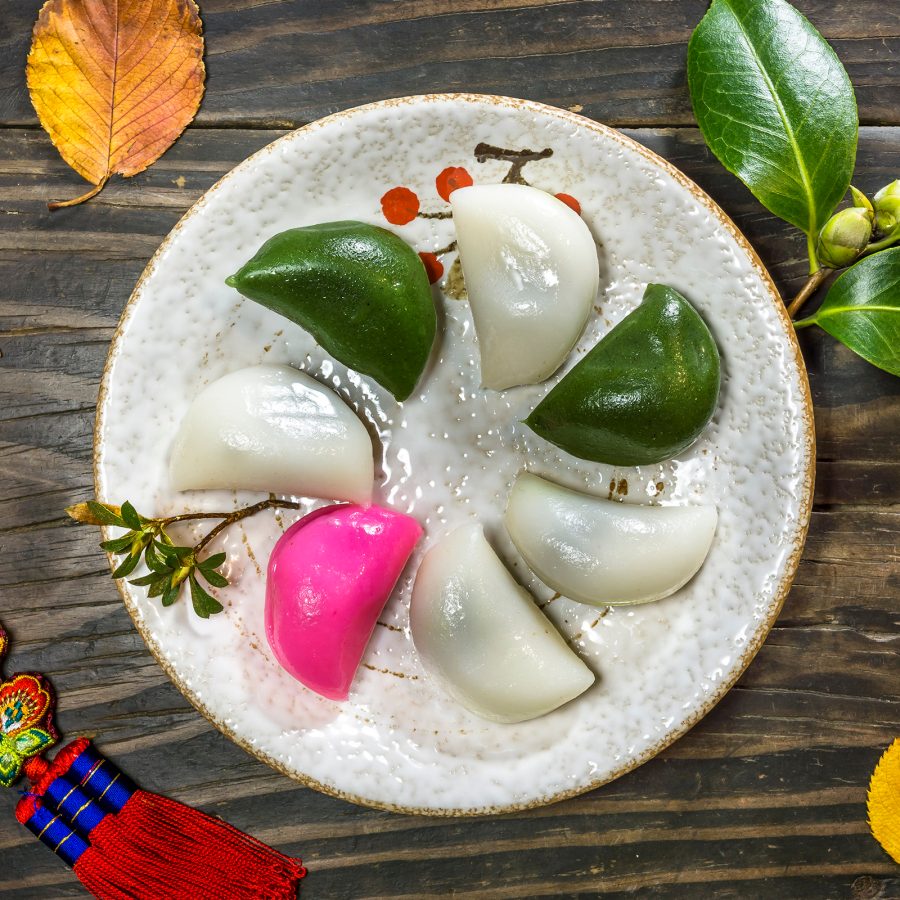
South Korea: Korean Thanksgiving
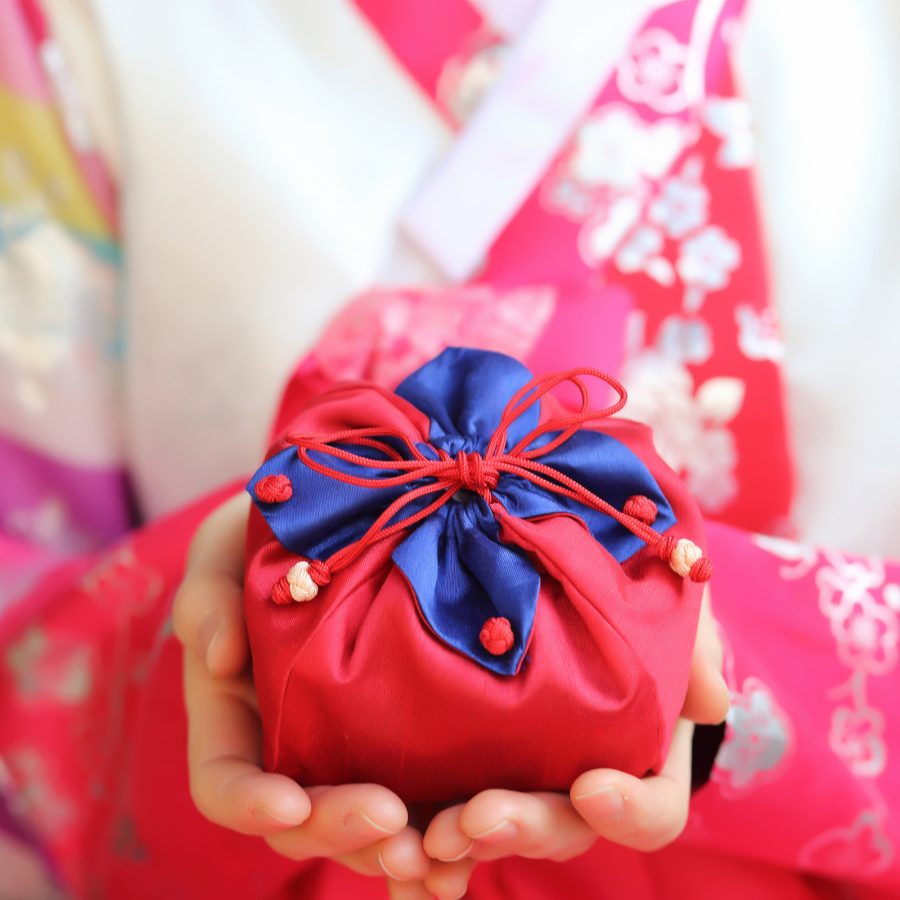
In South Korea, the festival is known as Chuseok, often dscribed as Korean Thanksgiving, when South Koreans give thanks to ancestors and nature for the autumn harvest. Many travel back to their hometowns from Seoul to celebrate with family reunions, where they eat songpyeon, a traditional half-moon-shaped glutinous rice cake filled with sesame, chestnut or red bean paste, steamed on top of pine leaves for the subtle scent.
Women will join the ganggangsullae, an ancient circle dance performed by lavishly dressed dancers to herald a bountiful harvest. A key feature of modern South Korea’s mid-autumn celebrations, the art form has been listed as a piece of Unesco intangible cultural heritage since 2009.
Credit: VCG/Getty Images
Chinese Mainland: dice games, pomelo lanterns and parades
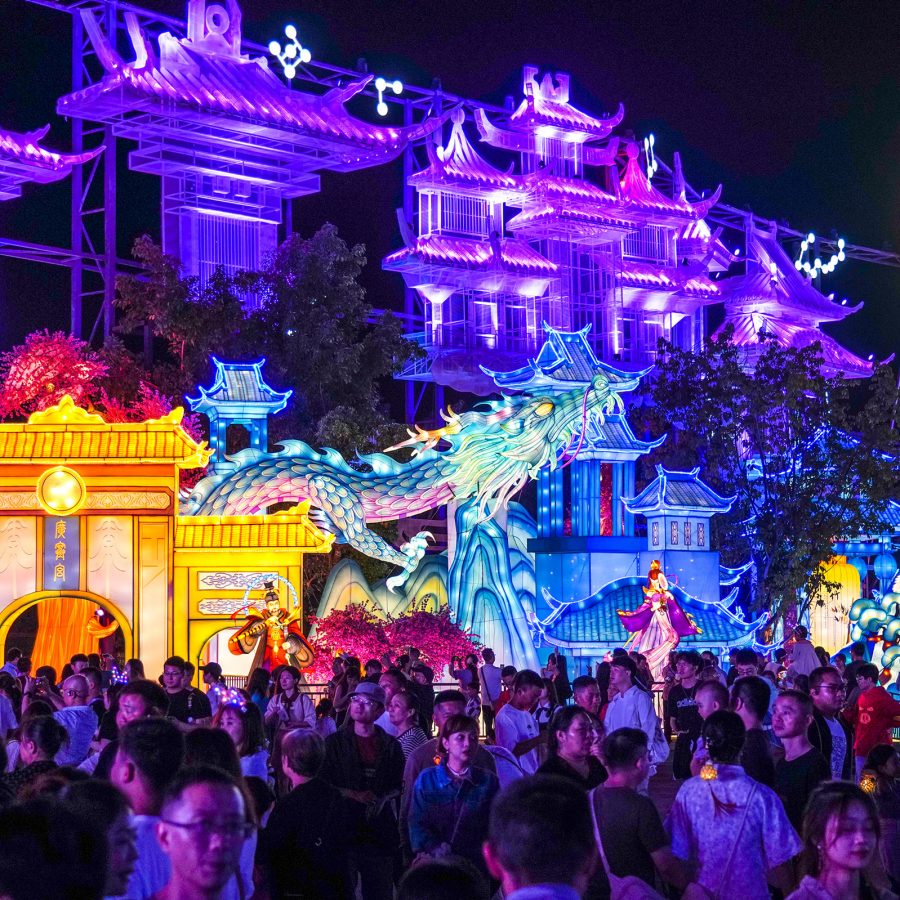
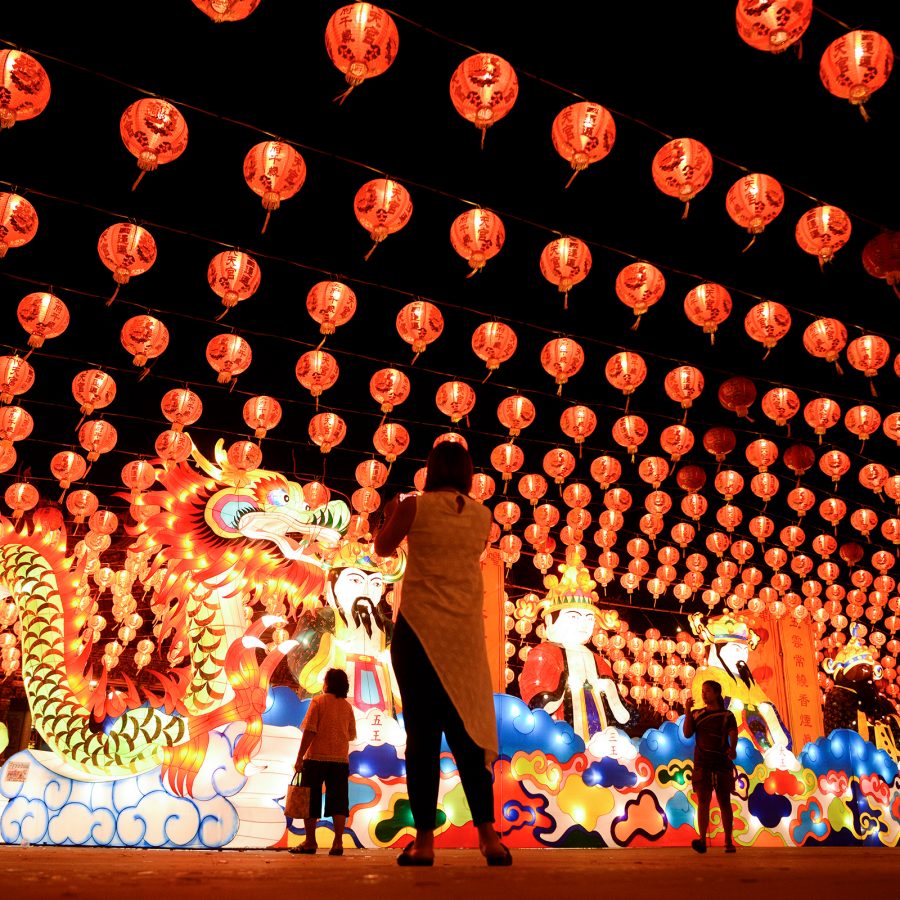
Across the Chinese Mainland, Mid-Autumn Festival boasts an extraordinary diversity of festivities. Xiamen is home to Bo Bing, a game played with six dice to determine winners of mooncakes in varying sizes. Sichuanese people decorate their façades with lanterns made from orange peels, an age-old eco-friendly celebration, while in the capital of Chengdu, children take to the streets carrying a pomelo “meteor hammer” weapon lit by incense sticks. In Guangdong, the occassion is marked by the Foshan Autumn Parade, featuring colourful effigies, floats and many other folk arts of the region.
Credit: MR. WUTTISAK PROMCHOO/Getty images
Credit: NurPhoto/Getty Images
Thailand: Moon Praying Festival
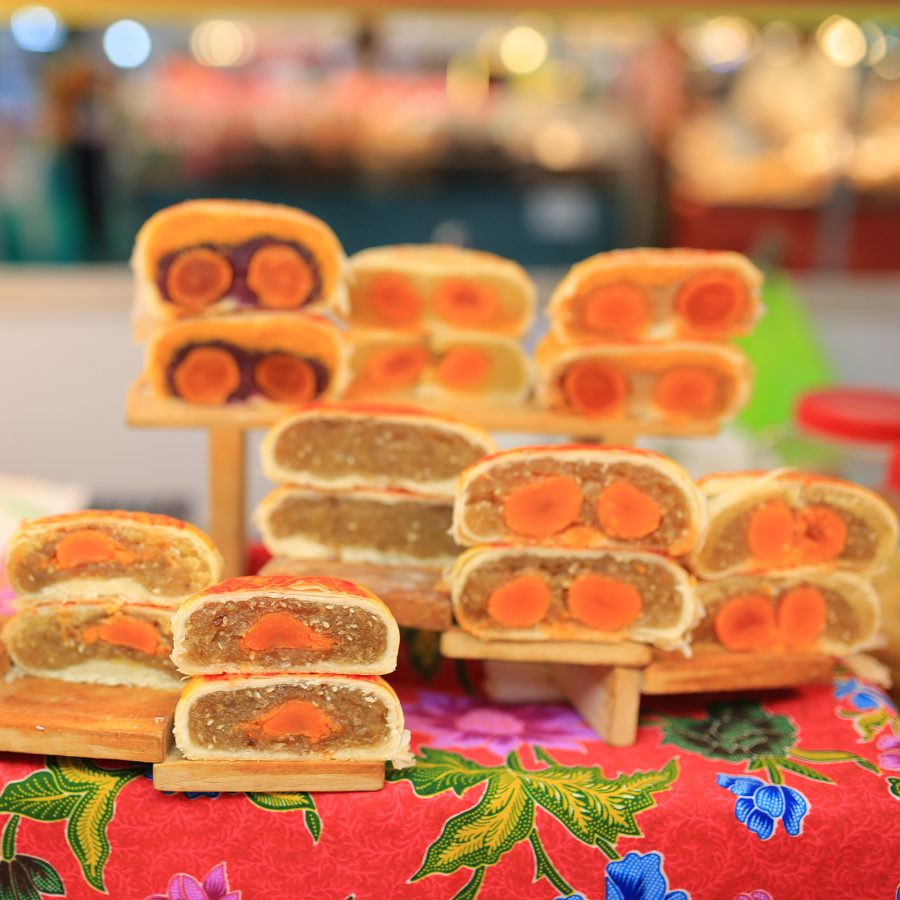
In Bangkok, you know Wan Wai Phra Chan (Moon Praying Festival) is in full swing when colourful lanterns line the streets of the Talad Noi neighbourhood and historic Charoen Krung Road. Unlike the legend of Chang’e and her ascent to the moon associated with Chinese Mid-Autumn festivities, Thai people honour the birthday of Guanyin, the Goddess of Mercy. To celebrate, Thai families offer fresh peaches or peach-shaped cakes – a symbol of longevity – and mooncakes to Guanyin for good luck, while displaying figurines of the mythical Eight Immortals.
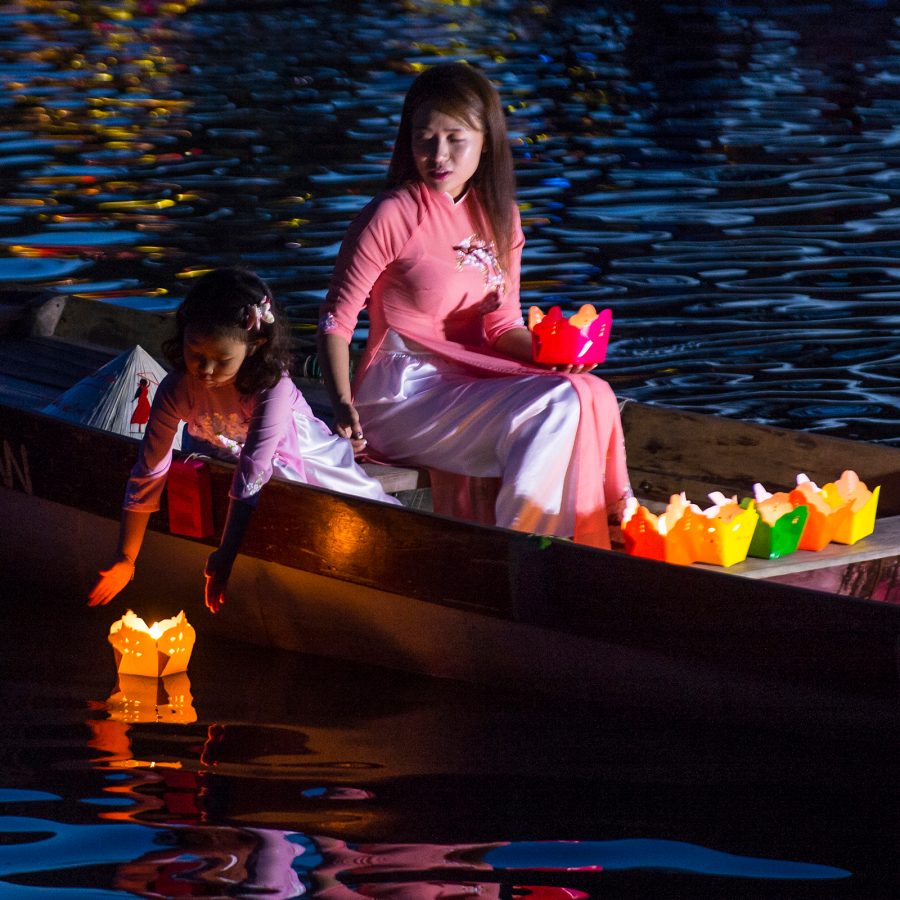
Credit: VW Pics/Getty Images
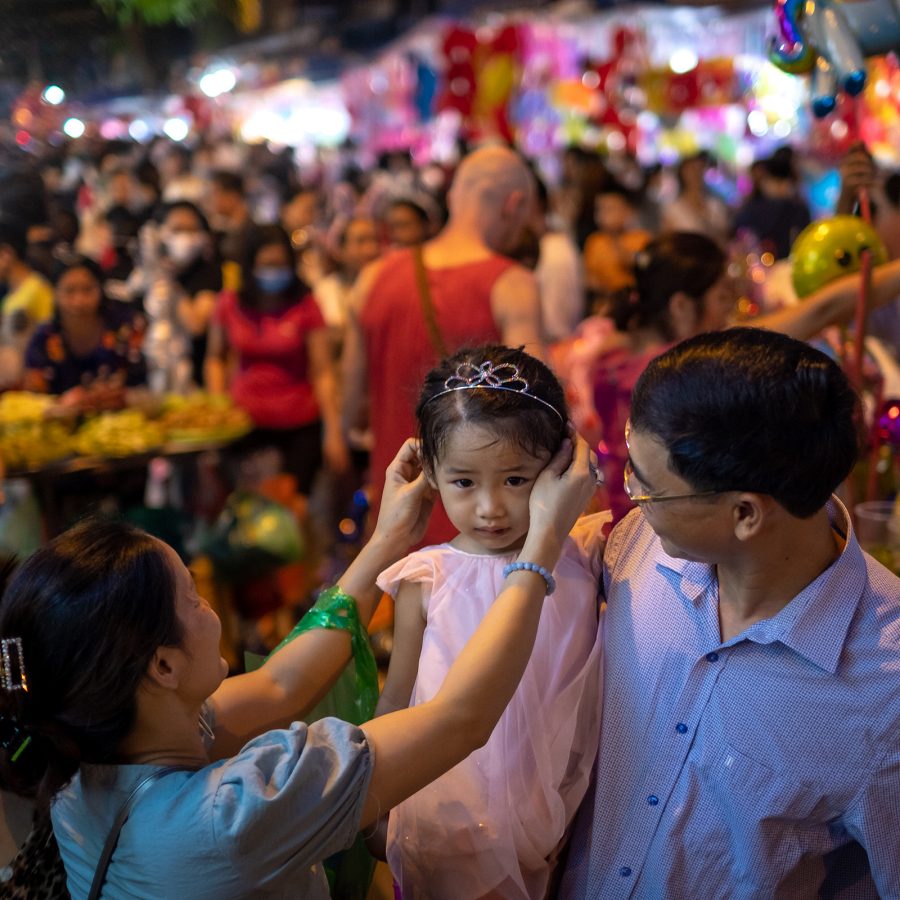
Credit: Linh Pham/Getty Images
Vietnam: Children's Festival
Vietnam’s Tet Trung Thu is primarily a children’s celebration. Historically, it would mark the end of the autumn harvest season, when parents could finally relax and spend time with their families after collecting the ripe crops. The festival also celebrates Chu Cuoi, a herbalist believed to have ascended to the moon on the skyward stretching branches of a magical banyan tree. To guide Cuoi on his return, his fellow villagers lit lamps during the full moon. Today, children in Hanoi celebrate Tet Trung Thu by parading star-shaped lanterns made with bamboo sticks and red tape, a nod to the national flag.
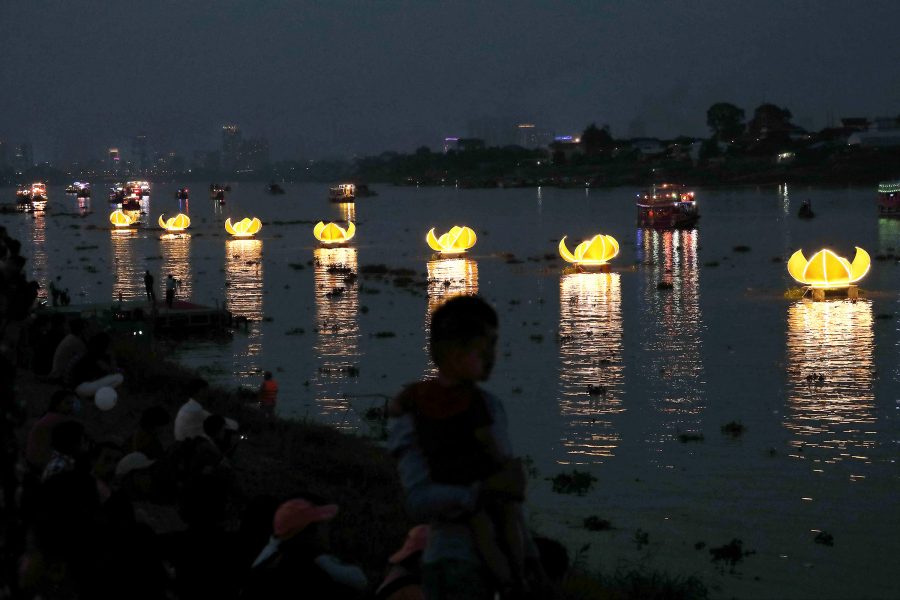
Credit: Satoshi Takahashi/Getty Images
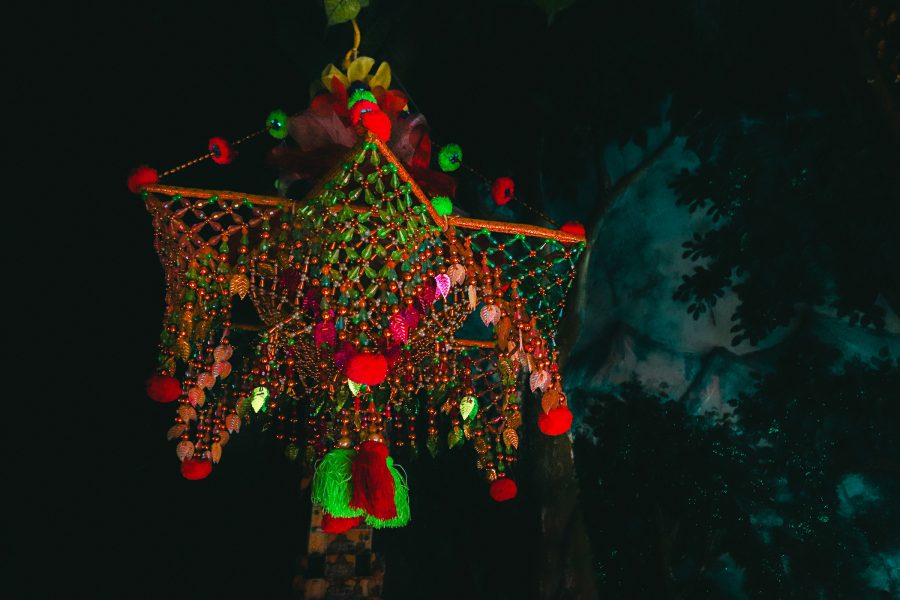
Credit: marie martin/Getty Images
Credit: Godong/Getty Images
Cambodia: water races and moon offerings
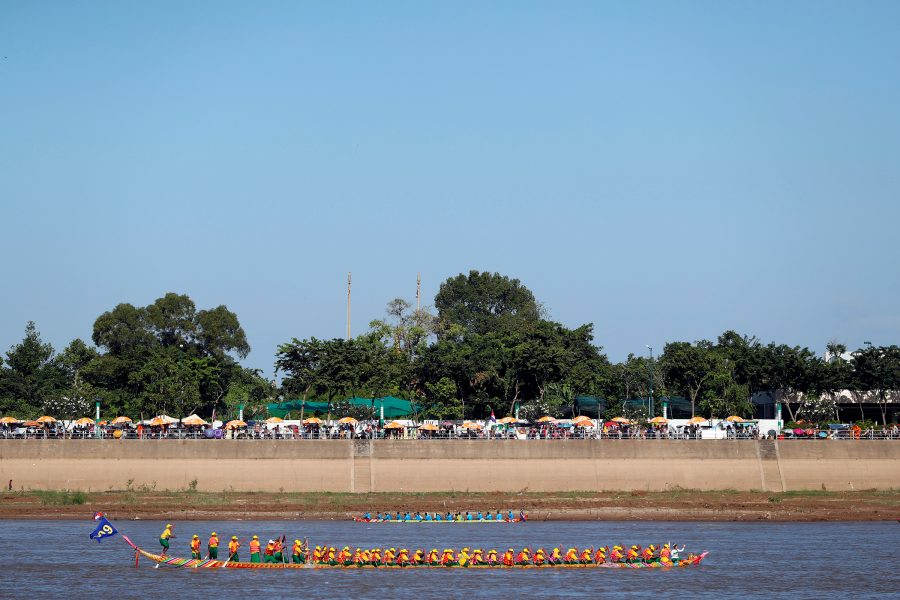
Cambodia celebrates the end of the rainy season and autumn harvest slightly later in the year with Bon Om Touk/. The three-day celebration in November features lantern displays, floating lamps and concerts, while at the heart of things are boat races on Tonlé Sap river, symbolising the end of monsoon season and wishing for bountiful harvests in the year to come. The festival culminates in the Sampeah Preah Khae ceremony, where people offer Khmer coconut cakes, fruits and bouquets to the moon.
This story was originally published in October 2025 and updated in September 2026.