Third culture kids: the people who can't really say where they're from

‘Where are you from?’
A simple question. But for me it’s the start of a complex discussion.
‘Hong Kong.’
‘You don’t look like it. Where are you really from?’
‘Well, I’m half English and half Chinese. I was born in Hong Kong, but I went to secondary school in the UK. I’m currently based in Hong Kong, but I’ve also lived and worked in England. Yes, I speak Chinese.
I’d call myself a Hongkonger. No, I haven’t met the Queen. Nope, nor Xi Jinping.’
There’s a name for this geographic identity crisis: I’m a third culture kid.
And I’m not alone.
Where are you from?
The official-sounding definition of a third culture kid – or TCK – is as follows: a person who has spent a significant portion of their developmental years living outside of the culture of their parents. They grow up neither a part of their parents’ culture, nor a part of the culture they’re living in. And so a third culture springs up around the other two: a unique identity.
The term was coined by anthropologists John and Ruth Hill Useem in the 1950s, originally to describe the children of American expatriates in India. It’s a fairly broad term covering everything from ‘military brats’ to the children of missionaries, diplomats, business people and Hong Kong’s own cross-cultural mix. Perhaps the best-known TCK is Barack Obama: son of a Kenyan father and an American mother, who spent his childhood between Indonesia and Hawaii.
Who are you?
But we’re more than a definition, or a category, or even a president: we’re a trend. A 2016 global population study by the UN found that the number of international migrants – that’s people living in a country other than where they were born – hit 244 million. That’s up 41 per cent since 2000. The study found that the number of international migrants has actually grown faster than the global population. Humanity is moving more than ever, faster than ever, around the planet.
‘It’s almost becoming the new normal,’ says Ruth Van Reken, co-author of TCK bible Third Culture Kids: Growing Up Among Worlds. Van Reken is a TCK herself: she grew up between Nigeria and the US, and has been studying and working with TCKs since 1984. ‘At the first conference I went to, Dr Ted Ward, a sociologist, said that TCKs were the “prototype citizens of the future”. We’re getting close to that now,’ she says.
What proportion of these 244 million international migrants are TCKs? It’s hard to say – the number covers expats, refugees and immigrants alike. But the lines are far blurrier than they used to be, points out Van Reken. ‘In today’s world, immigrants go back and forth. They’re having a more TCK life than the old immigrants because they have more access.’ When people move country, TCKs are – literally – born.
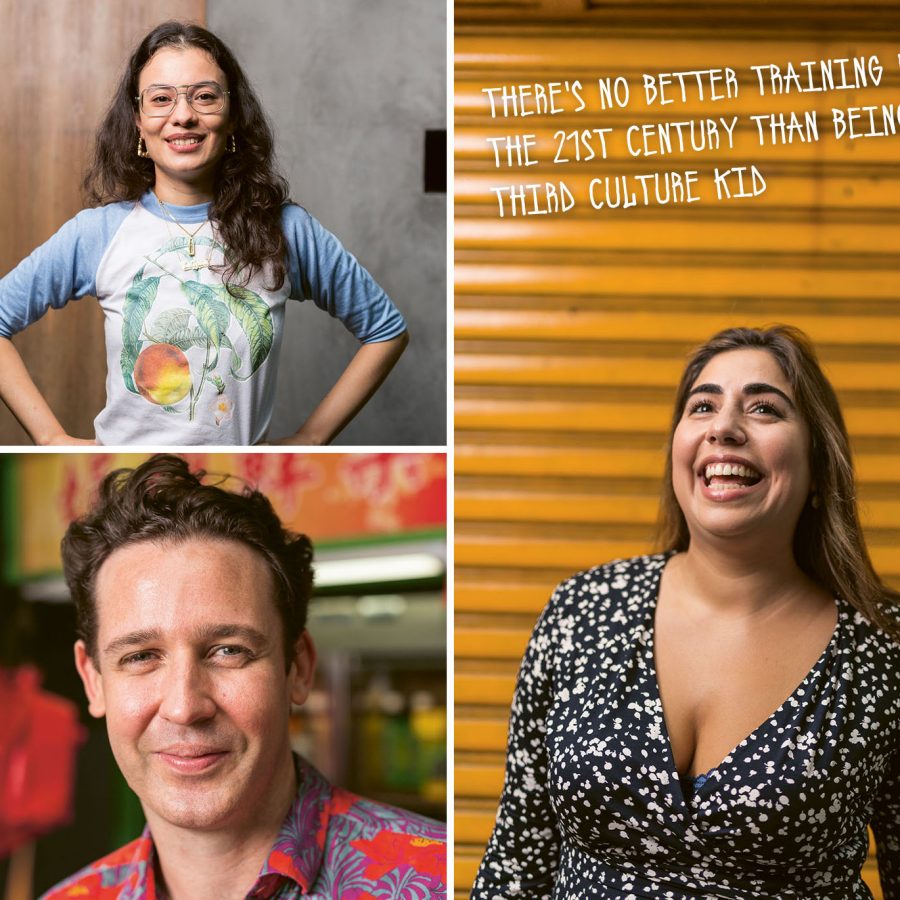
Credit: Mike Pickles
What do you look like?
It’s hard to define your standard TCK, but there are a few elements many of us share. TCKs are frequently characterised as socially adaptable, more able to think outside the box and to understand different points of view – essential skills if you want to thrive in new surroundings. Studies have shown that we’re often power players, highly educated and professionally successful.
We’re also often very privileged – overseas or international school education doesn’t come cheap. We’ll often have conversational fluency in at least two languages – although I admit my Cantonese could be better, and my Mandarin is worse. We’ll often have an ambiguous accent – my own intonation shifts depending on whom I talk to, from upper-crust British to transatlantic drawl to ‘lahh’-heavy Hong Kong inflections. We tend to travel a lot: for school, for work, for pleasure. I was in five countries in five months in the first half of this year, and I’ll visit another four in the months to come. With family spread across the world, holiday planning is a nightmare.
Travel is at the very heart of the TCK. Many of us have flown before we could walk. When we grow up, we travel because it’s at the heart of how we see ourselves – as exploring entities, not static creatures of habit. The TCK won’t just stick to their own backyard when they could go further afield. As much as Hong Kong is home, I tend to tell people that I’m ‘currently based’ in the city. Transience is how we see the world.
Online, the TCK thrives. This jet-setting global citizen was born for Instagram, a medium which prizes the exoticlocale. Think of Instagram profiles with multiple flags flying: ‘HKG/LDN, world citizen | global creative,’ they proudly (and annoyingly) proclaim.
The TCK is most at home in big cities – New York, London, Hong Kong – where they’re likely to find others with the same experiences. Homogeneity doesn’t sit well with us. It feels regressive, a step backwards into a world we’ve moved beyond. TCKs share commonalities of experience with each other, not pop culture references. We recall similar travels, upbringings, people – and we always, always crave the food of the country we’re not in. In London, I yearn for wonton noodles. In Hong Kong, I’d kill for a proper block of cheddar.
‘TCKs have this elemental, shared emotional space of what it means to move between countries, and it transcends our cultural differences,’ says Ruth Van Reken. ‘I speak to audiences with 40, 60, 70 nationalities. I can’t translate it culturally. But if you talk about the human heart, and what it feels like to not be known, to be the stranger, to say goodbye to a place you love – those things are human experiences. This experience transcends the traditional ways we name people.’
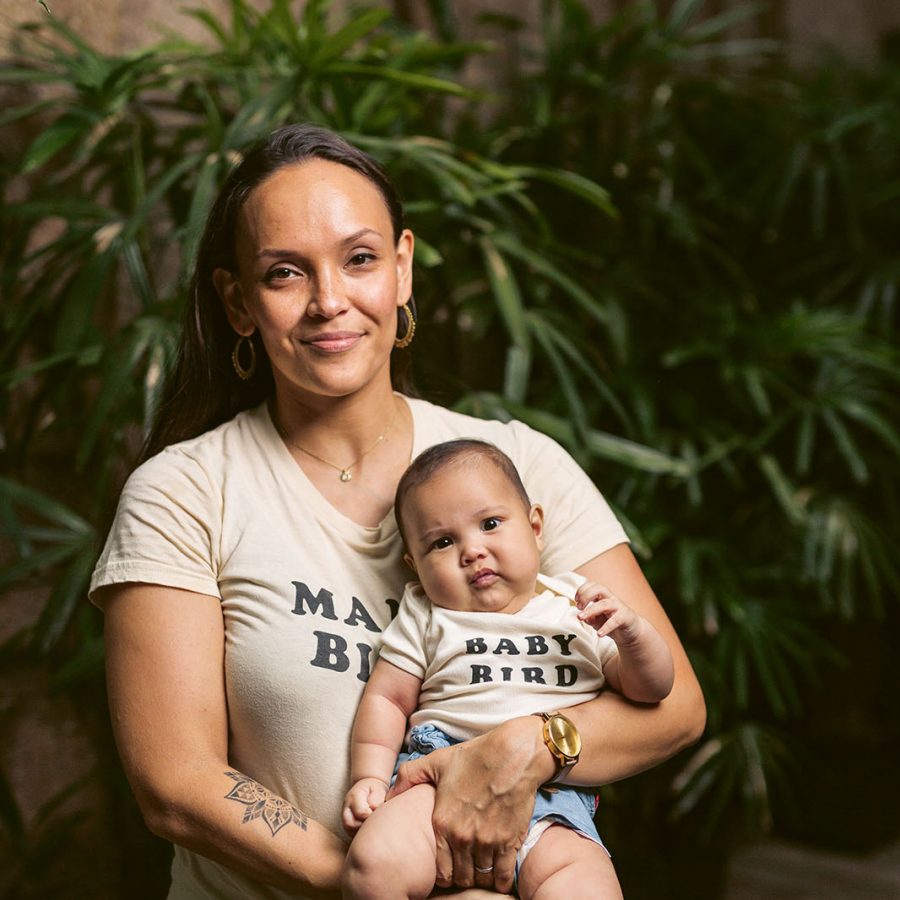
Credit: Mike Pickles
How do you define yourself?
There’s a think piece or blog post that resides inside every TCK, and it runs along the following lines: ‘What defines me? Where do I belong? Where are my roots? Can I truly say I have a home?’
Personally, I’d never really had these concerns. I used to think this was all self-indulgent rubbish. But the more I’ve talked to others, the more I’ve realised that these can be real issues for the TCK. After all, everyone on the planet is looking for a sense of identity, and with a TCK the waters are muddier by far.
In fact, TCKs have documented struggles with feelings of loss, unresolved grief and alienation. ‘When I left Nigeria, I lost my world totally,’ explains Van Reken – but she notes that it took her years to understand it as a loss. Disrupted childhoods can make it difficult for TCKs to form deep connections with others. ‘TCKs can make loads of friends, but they may find that they have a certain guardedness in close relationships,’ Van Reken says. After all, why bother getting close to someone, when everyone you know has already moved away (or will eventually)?
As TCKs go, my biography – Hong Kong, the UK, Hong Kong – is pretty straightforward. My particular Chinese/English mix is unremarkable in this city, where people are Thai/Burmese/Indian or Swedish/Japanese/Scottish. I was brought up between a mere two countries – what am I, pretending?
TCKS RSVP to an SCK
CATHY ADAMS compares world views at our TCK shoot
I’m a single culture kid. My entire family live within about two hours’ drive of where I grew up. My first plane journey was when I was 15 (howl). My best friends are the ones I grew up with. All this is supposed to render me unworldly and immobile at best and a stupid racist at worst.
Then I moved to Hong Kong with my British husband (of Indian heritage). Here, I feel more British than ever.
Rather than bemoan my status as an SCK, I organised a party for Hong Kong’s third culture kids instead (thanks to Edition Bar on Peel Street – everybody should go for their HK$5 chicken wings and soju on a Monday night).
They all loved being exotic third culture kids. One has even set up a lifestyle site – Third Culture – to discuss TCK issues.
But at school, our TCKs only wanted to fit in. Even now, they all said they didn’t like being away from family. One even said the worst thing about being a TCK was having to answer questions about what life was like as a TCK. They’re ultra empathetic – but an SCK can be, too, and still hanker for Essex nightclubs and salt and vinegar crisps.
Eventually, and thanks to Edition’s fine gin cocktails, Harry Oram, Mr Third Culture (tcthirdculture.com ), called me an honorary TCK. That’s something I’ll take all the way back to Essex.

Credit: Mike Pickles
Why Hong Kong?
To some, my face is as confusing as my accent or my life story. As a Eurasian, my face is ethnically ambiguous. In Southeast Asia, I’m greeted in a range of mother tongues – Thai, Vietnamese, Tagalog, Bahasa Indonesia – none of which I speak. Meanwhile, in England people assume I’m Chinese. In Hong Kong they’re surprised when someone with my face speaks Cantonese. On the Chinese mainland, they take one look at my face and assume I’m from Xinjiang, where everybody’s a little bit mixed. It’s nice to feel included.
Growing up in Hong Kong, I was fortunate. This is a city built on multiple identities: from the British to Chinese to the unique Hongkonger identity that has grown up in recent years. This is a city that’s long been open to business, to immigration, to newcomers from across the world. It’s a third culture kind of town.
And the city has led me to believe that the power of the TCK doesn’t lie in being permanently homeless or rootless. We can make our homes where we choose. We can construct our identities, not have them forced upon us. Me, I choose Hong Kong.
What should we call you?
The only thing I’d like to change? The name. ‘Third culture kid’ has never quite done it for me – but no one’s come up with a better idea yet. There’s something about the ‘kid’ aspect that doesn’t sit right: it makes us seem like dilettante globetrotting millennials – the Rich TCKs of Instagram.
Van Reken has expanded her work to ‘cross-cultural kids’ as an umbrella term that can sum up more global experiences. ‘We talk about the gifts of the TCK, but what about that minority kid who transcends culture every single day they go to school?’ she asks. ‘They’re learning cross-cultural skills, but nobody’s affirming it for them. I feel like we’ve barely begun.’ Perhaps we just have to let it play out – to wait until so many of us are multicultural in outlook that TCKs just get called ‘people’ once again.
What’s next for the third culture kid? Global domination, with luck. Technology and affordable travel mean we’re living in a world that’s continually getting smaller, and our flexibility and multiculturalism is an increasing asset.
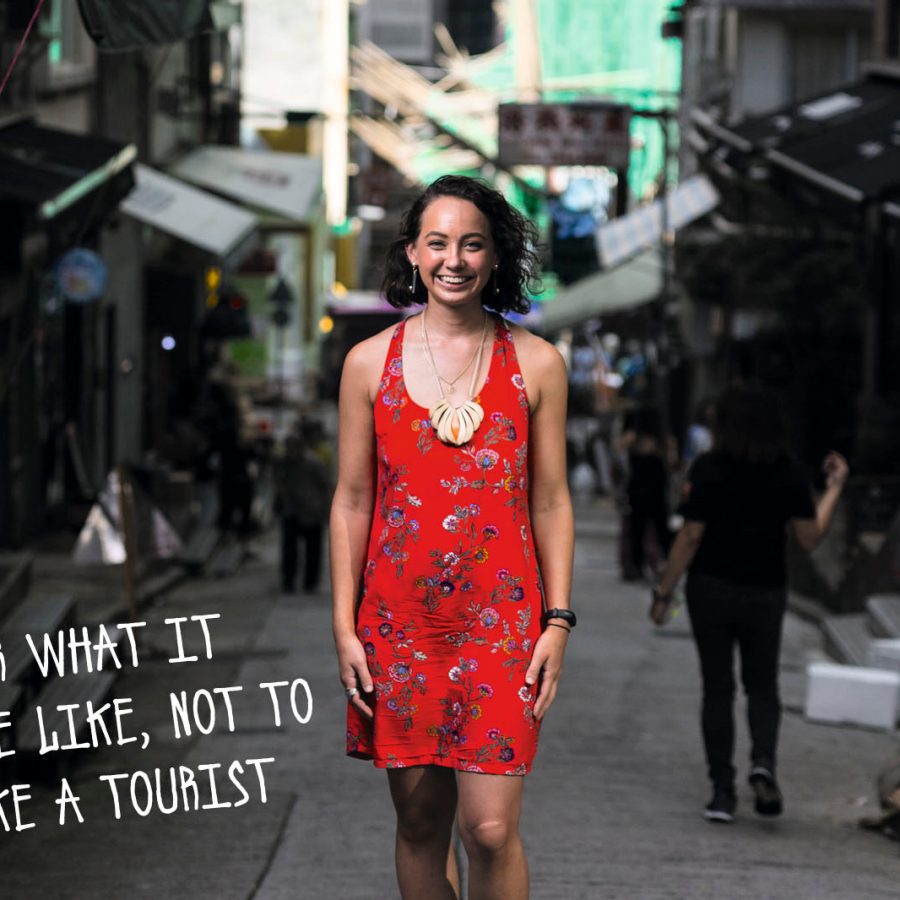
Credit: Mike Pickles
Why do you hate us?
But the truth is that in the last year or so, the world seems to have turned against my kind. I thought we were all swiftly careening towards a globalised, multicultural future – but the planet seems to have had other ideas. The rise of Donald Trump, of Brexit, of nationalist sentiment across the world – Turkey, the Philippines, Indonesia, China – came as a shock to some of us. It feels like a slap in the face to me and my kind. The only thing that seems to be truly global these days is insularity and nationalism.
I do understand it, however. My first-world globe-trotting life isn’t exactly a hard-knock existence. I’m not a casualty of globalisation, but a beneficiary. Meanwhile, the shrinking world means that thousands feel their identities are being stripped from them. The world isn’t the simple place it once was: and suddenly in waltzes the TCK with his multicultural outlook and cavalier sense of place. We represent much of what a ‘first culture’ person might fear and resent (see boxes). It’s ironic: whereas we TCKs struggled to find an identity from the murk of multiple cultures, now it’s those with crystal-clear ideas of their single culture who feel themselves under threat.
But Van Reken is hopeful that the TCK’s multicultural outlook is a tool that will brings us closer together, no matter how divided the world might seem. ‘The more we know our own story, the more we can use it to connect to people,’ she says
After all, the only reason TCKs exist is because at some point, our parents made the choice to explore. To leave the comfortable slice of life they called home. They made new homes for themselves, and they spliced a new way of seeing the world into our DNA. We were forged as third culture kids. We are inclusive, open, accepting. We span the globe. The rest of the world is just playing catch-up.
Third culture media
TCKs are an ever-growing group – and they’re creating insightful media about cross-cultural identities
READ
The Sympathiser, Viet Thanh Nguyen’s stunning, darkly humorous look at Eurasian and third culture identity after the Vietnam War.
The Brief Wondrous Life of Oscar Wao, in which Junot Díaz merges Puerto Rican Spanglish with nerdy boyhood to wonderful effect.
The Reluctant Fundamentalist by Mohsin Hamid explores being torn between Eastern and Western cultures and worlds.
Persepolis by Marjane Satrapi bridges Iran and Austria in a beautiful graphic novel.
Do Not Say We Have Nothing – Madeleine Thien’s examination of the experience of Chinese immigrants in Canada.
White Teeth by Zadie Smith charts generations of immigrant children in London.
LISTEN
Constantly – Emmy the Great
The Eurasian singer/songwriter, who was born in Hong Kong, lived in London and now resides in New York, recorded this song twice, once in English and again in Mandarin – a tribute to her twin heritages.
Immigrants (We Get the Job Done) – The Hamilton Mixtape
Based on a song written by TCK playwright Lin-Manuel Miranda and performed by a who’s who of multilingual hip-hop stars, including Somali-Canadian rapper K’naan, Mexican-American Snow Tha Product, and British-Pakistani Riz MC (actor Riz Ahmed).
- China – the Chinese Mainland, Hong Kong SAR, Macao SAR and Taiwan Region
- Hong Kong SAR - English
- Chinese Mainland (China) - English
- Taiwan, China - English
- 香港特別行政區 - 繁體中文
- 中国內地 - 简体中文
- 中國台灣 - 繁體中文
- Africa
- South Africa - English
- Asia
- Bangladesh - English
- Korea - English
- Singapore - English
- Cambodia - English
- 한국 - 한국어
- Sri Lanka - English
- India - English
- Malaysia - English
- Thailand - English
- Indonesia - English
- Maldives - English
- ประเทศไทย - ภาษาไทย
- Indonesia - Bahasa Indonesia
- Myanmar - English
- Vietnam - English
- Japan - English
- Nepal - English
- Việt Nam - tiếng Việt
- 日本 - 日本語
- Philippines - English
- Australasia
- Australia - English
- New Zealand - English