
Dubai may be known for its shimmering skyscrapers and luxury lifestyle but, at its heart, this is still a desert land. Peer out of any high-rise and your eyes will soon settle on a strip of pale-yellow sand in the distance, once home to nomadic tribes who used the night skies as maps.
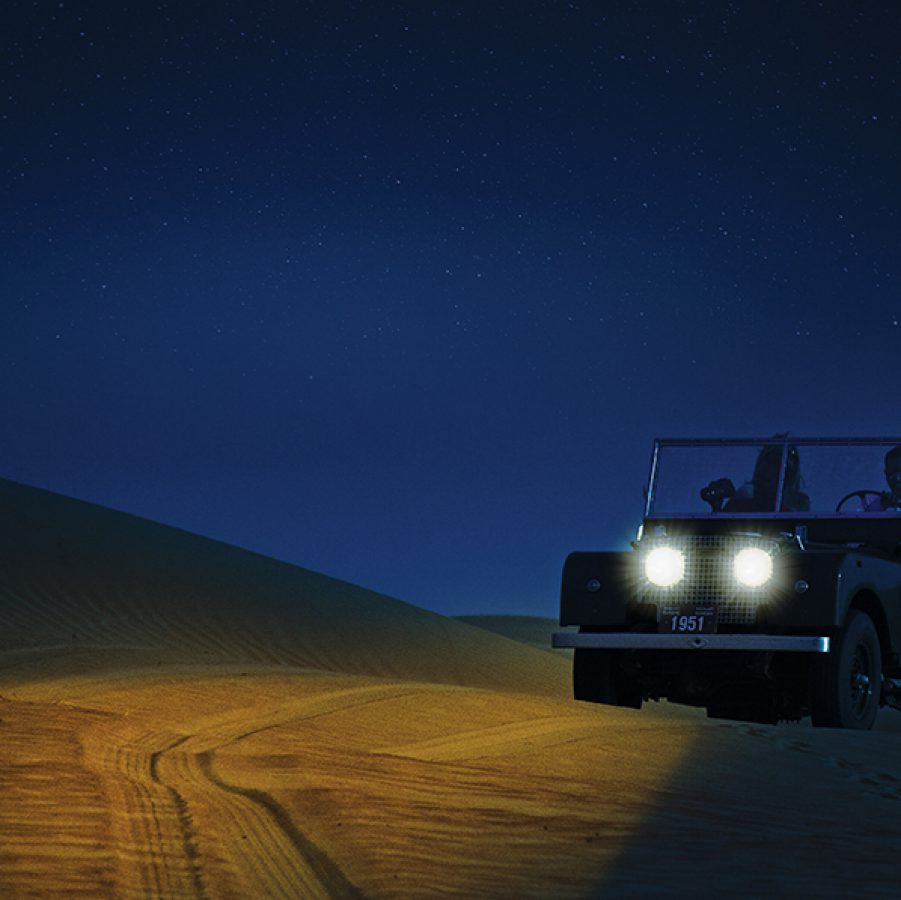
It’s a hot evening when I head into the Dubai Desert Conservation Reserve with desert safari operator Platinum Heritage . While there’s a singular beauty to the landscapes by day with their wandering camels, dunes carved into wave-like patterns by the wind and hardy desert plants that add glimmers of silvery green, it’s at night when the inky skies put on dazzling celestial spectacles.
A fascination with the desert is shared by locals and those who have chosen to make Dubai their home. South Africa-born Austin Landsey, a conservation guide at Platinum Heritage, fell in love with the stars when he moved here in 2021, finding inspiration in the connection between the constellations and Arabian heritage.
“The most important star for the Bedouin was the North Star, or Polaris. They would use it to find their way around the desert and to find different water sources in different seasons,” says Landsey. “The position of certain stars and constellations helped them track the passage of time and determine when to migrate.”
And so here we are, bouncing through the desert in a vintage Land Rover, with our faces wrapped in scarves to protect us from the sand thrown up by the tyres. The evening begins when we pile out of the car at a sheltered patch of sand with cushions and low tables facing the sunset. As we nibble on snacks and sip cold drinks, the sun makes its slow progress towards the western horizon, heavy and orange against a sky that gradually changes from dusky pink to dusty grey.
As the sun drops out of view, our guides tell us to turn around and face the other way, where the first glow of a peach-coloured rising supermoon illuminates the sky behind the dunes. As it gets higher, it becomes whiter and more defined, eventually so bright that it casts shadows of palms, people and ruminating camels onto the sand.
The sound and aroma of coffee beans roasted over white-hot coals signify the start of dinner, where freshly made flatbreads and platters of grilled meats and vegetables are served under the bright supermoon. Once replete, we lie back and gaze upwards as an astronomer tells us tales of the sky, recounting the names given to the constellations by ancient Arab and Greek astronomers.
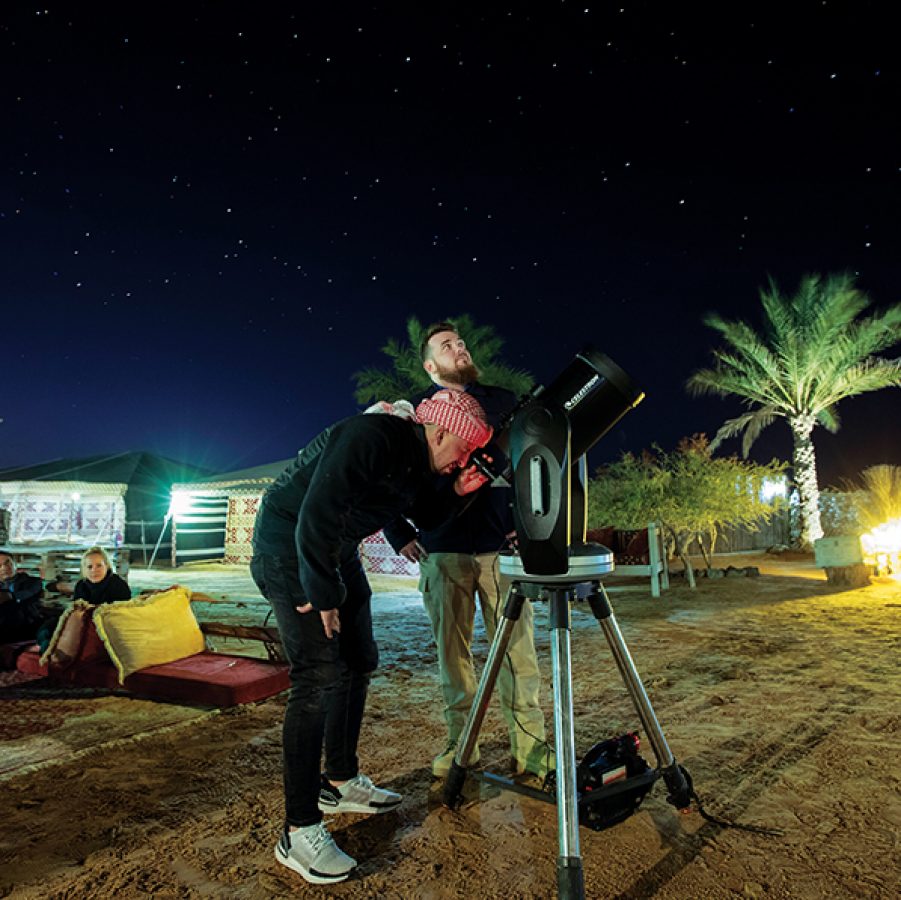
I peer through a high-powered telescope at the silvery white moon, full of pale grey craters, ridges, ejecta rays and lines formed by asteroids and comets smashing into its surface over millennia. Depending on the time of year, the Dubai night sky forms a canvas for the Milky Way, Sirius, Orion, and Canis Minor and Major, as well as Cassiopeia, which was used to find the all-important North Star.
“Cassiopeia was the signal for the Bedouin to start their night journeys, a symbol of guidance, protection and enduring connection to the desert,” explains Landsey. Tonight, even the moon’s luminosity can’t diminish the brightness of Saturn in the cloudless sky. Through the telescope, its rings are perfectly clear, like a high-resolution illustration.
As we gaze at the sky and listen to tales of antiquity, mythology and astronomy, I feel a connection to the lives of the Bedouin, who once sat around campfires telling their own stories at night. Beneath its glitz and glamour, Dubai’s deep connection with its desert heritage lives on. You just no longer need a map of the stars to navigate it.
How to get there
The Dubai Desert Conservation Reserve is a 45-minute drive from central Dubai.