
Conscious use of resources
When it comes to the resources we use, we care about every stage of the journey. From how raw materials are produced, to how we recycle waste products, we are constantly improving our operations and procedures.
Rethinking the use of plastic
Plastic is versatile, cost-effective and light, which is useful for the aviation industry because the reduction of in-flight weight leads to less fuel use and carbon emissions. However, plastics take a long time to degrade and are clearly harmful to the environment if treated irresponsibly.
That’s why we’re committed to decreasing the amount of plastic waste we generate. Watch the video below for a behind-the-scenes look at the sustainable changes we’ve made on board, and explore our YouTube playlist to stay up-to-date on our journey towards a greener future.
We adopt the 4R approach to plastic:
Rethink
how we use plastics
Reduce
plastic consumption
Reuse
items where possible
Recycle
used plastic into new items
Moving forward in the single-use plastics reduction journey
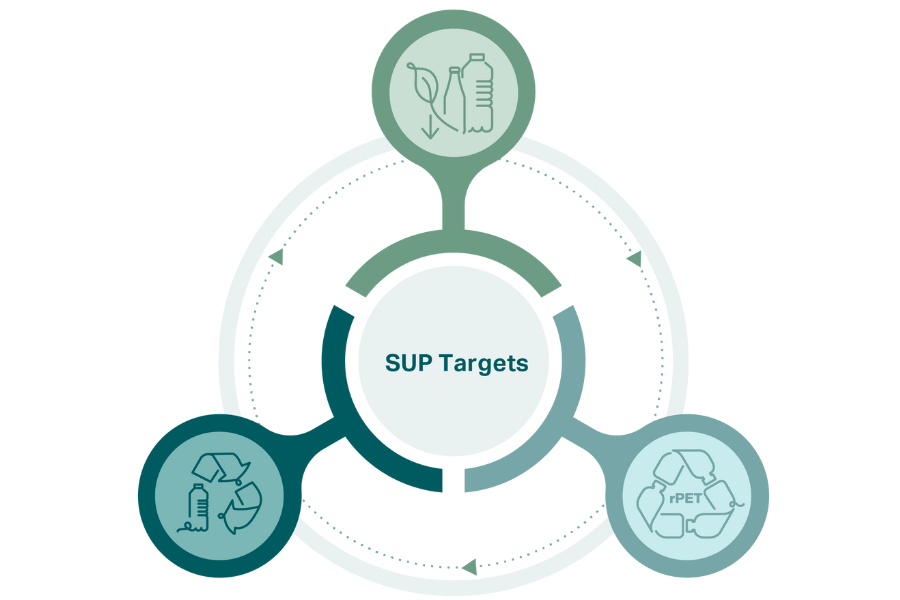
Since 2001, we have been on a journey to reduce single-use plastics (SUP). In recent years, we have made significant progress by eliminating many of our highest-consumption SUP items, such as cups, cutlery and salad bowl lids used in our Economy cabin. Continuing on this path, we have set ambitious targets for 2025. To address the impacts of the remaining passenger-facing SUP items more holistically, we have established a set of targets that consider not only their use phase but also their sourcing and disposal, aiming to mitigate both upstream and downstream impacts.
USE
Reduce passenger-facing SUP items from an average of 7.7 pieces per passenger in 2019 to 1.5 pieces by 2025*.
Dispose
Increase the inflight recycling rate of water bottles to 33%.
Source
Ensure 50% of the remaining passenger-facing SUP items are made from recycled plastics.
* Onboard Cathay Pacific flights only. These items include passenger facing SUP water bottles, utensils, amenity items and packaging, excluding SUP items for medical and sanitation purposes and prepackaged food and beverage items other than water bottles.
Recent highlights include:
- Introduced a first-of-its-kind recycling and sorting workflow for water bottles at Hong Kong International Airport.
- Switched all water bottles loaded from Hong Kong to bottles made with 100% recycled plastic.
- Transitioned to wooden ice cream spoons across all flights.
- Launched feasibility trials to replace plastic wrapping for blankets and headsets with paper alternatives.
- Phased out SUP beverage cups, formerly our most numerous plastic items, and replacing them with certified Flustix paper cups that are compliant to EU SUP legislation.
- Replaced single-use salad bowl lids with reusable lids.
- Replaced economy class reusable plastic cutlery with lightweight metal cutlery.
Reducing cabin waste
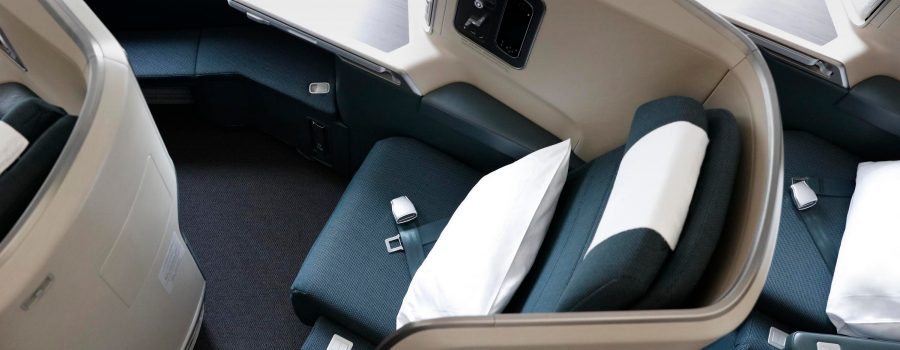
As part of our long-term waste management commitment, we aim to reduce cabin waste to 0.63 kg per passenger by 2030, representing a 30% reduction from 2019 baseline.
To get there, we are innovating how we operate and the materials we use across everything we do. We strive to personalise our customers’ experiences to create better journeys with less waste.
Responsible sourcing
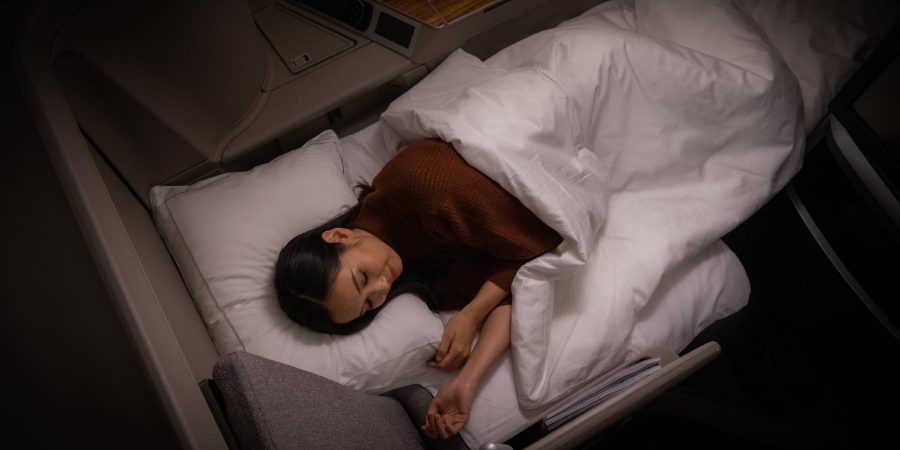
We take sustainable sourcing seriously. We work closely with our suppliers to ensure we are always working to increase our use of sustainable materials, regenerated waste materials and recycled products.
Reducing food waste
Last-minute meals
Meals are delivered as close to departure as possible to minimise waste.
Digital planning
We’ve introduced Choose My Meal to digitally manage meal choices.
Hong Kong charities
We redistribute surplus food through Feeding Hong Kong and Food Angel. In 2024, we donated 336 tonnes of surplus food to those in need.
Harnessing surplus power
Inconsumable food waste is sent for food recovery.
Food to fuel
We turn our used food processing oil into vehicle biofuel.
Sustainable inflight dining
Retired aircraft
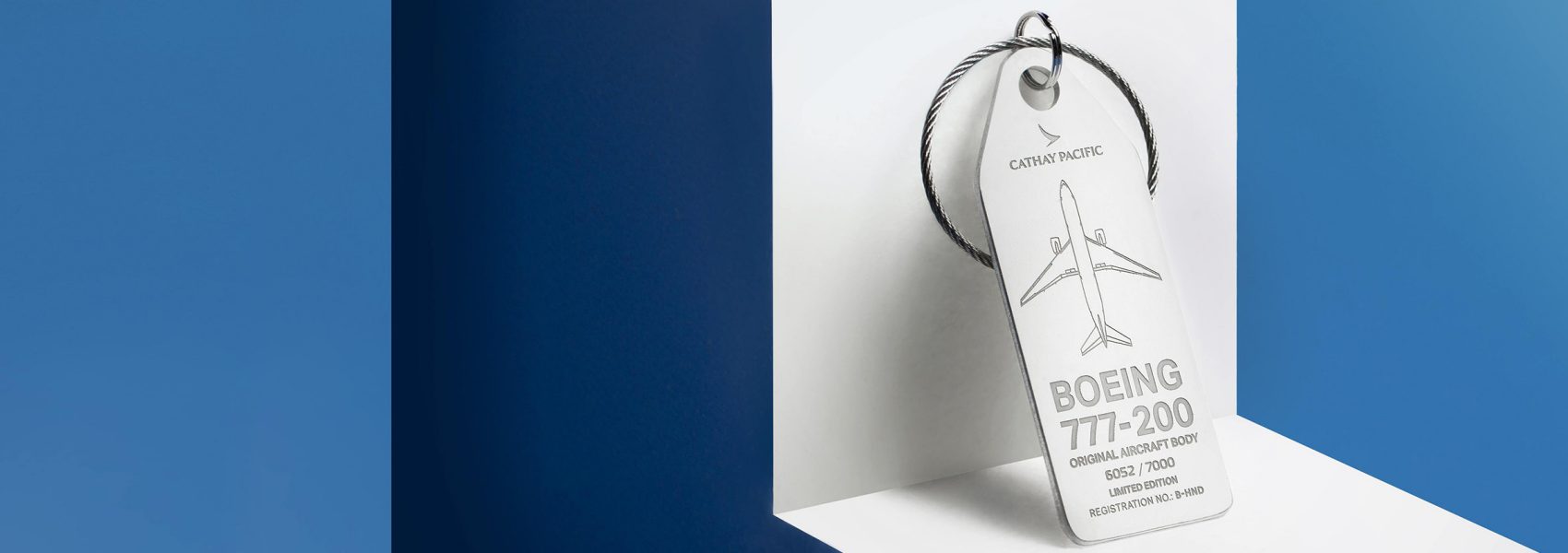
At the end of the service of our aircraft, we work with aircraft manufacturers and companies specialising in end-of-life solutions in order to salvage spare parts and recycle or reuse aircraft parts and materials. In 2021, we launched special memorabilia upcycled our beloved aircraft, including aviation tags and pen and cardholder sets created for our 75th anniversary.
Sustainable considerations in the cabin
1. Certified Flustix paper cups that are compliant to EU SUP legislation.
2. All water bottles loaded from Hong Kong are made with 100% recycled plastic.
3. Snacks produced using certified sustainable palm oil to help minimise environmental impact.
4. Certified sustainable seafood in inflight meals.
6. Lightweight metal cutlery and reusable plastic cutlery across economy class cabins.
5. Napkins sustainably produced from sugarcane and wood pulp.
7. Recyclable paper snack bags.
8. Economy class blankets made from recycled plastic bottles.
12. Wooden ice-cream spoons to replace plastic ones.
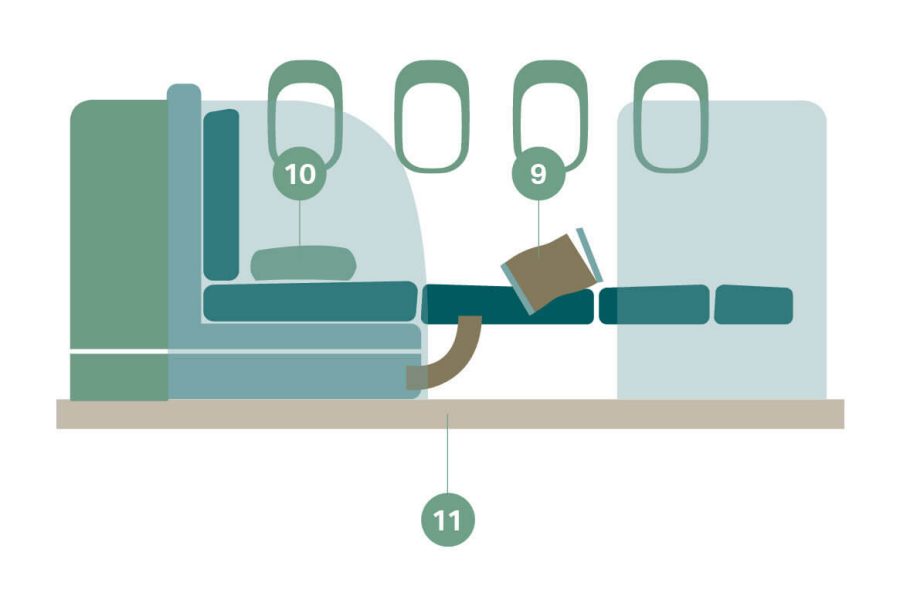
9. Pillowcases and duvet covers in First Class and Business made from 100 per cent sustainable cotton.
10. Reusable Business class duvet and blanket packaging.
11. Carpets in Business and Economy Class cabins of some aircraft are made from regenerated nylon waste materials such as discarded fishing nets.