
Sustainable dining is moving from a buzzword to a practical question for restaurants and diners alike: how can a meal make less impact? But in a city like Hong Kong, where convenience is king, how can diners identify restaurants that are making a difference? As the Michelin Green Star is phased out, chefs and customers can still find ways to champion sustainability.

Credit: Feuille
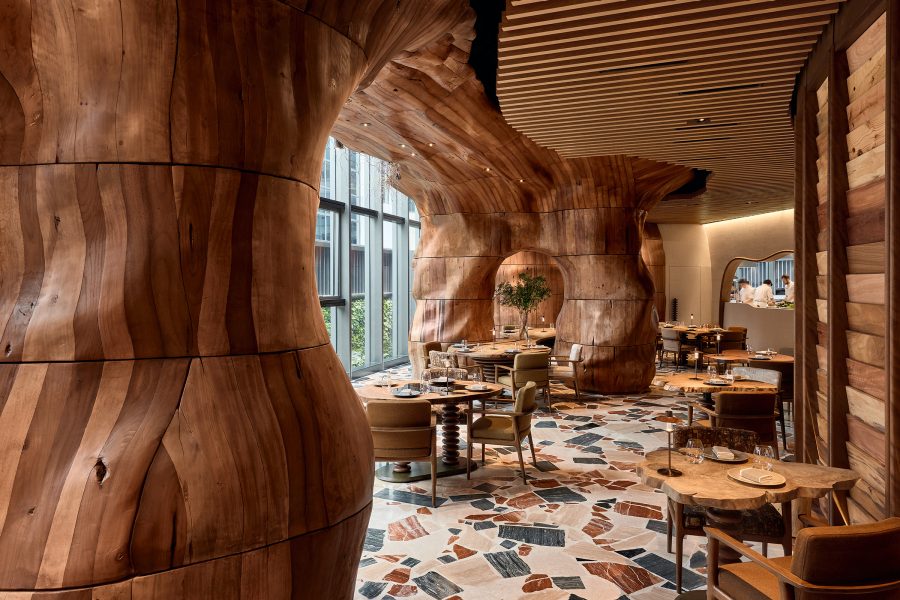
Credit: ROGANIC

Credit: Amber
How to recognise a sustainable restaurant in Hong Kong
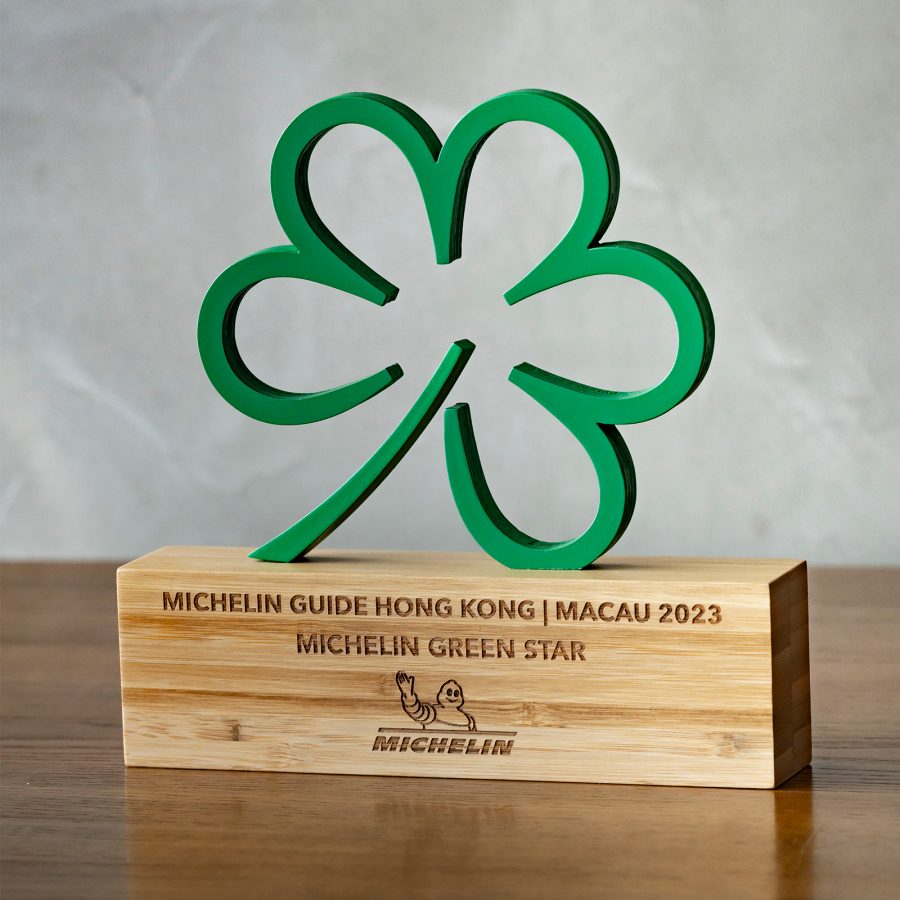
Introduced in 2020, the Michelin Green Star was launched to spotlight restaurants within the Michelin Guide making significant efforts to promote sustainability. Restaurants were chosen based on their eco-friendly practices, including working with sustainable producers and suppliers and reducing the use of plastic in the restaurant supply chain.
In Hong Kong, four restaurants held the Green Star: three-Michelin-starred Amber and one-star restaurants Roganic, Feuille and Mora. But the Green Star is now being phased out, as Michelin develops a broader sustainability-focused initiative. As cultural consciousness shifts the parameters of what sustainability is and looks like, it raises a larger question: how can restaurants demonstrate meaningful progress?

Credit: Mora

Credit: Mora
For chefs such as Vicky Lau of Mora and Tate, the answer lies in the daily decisions behind the menu. “The main point is, we’re not doing it because of the Green Stars,” she says. Cooking sustainably, she explains, is deeply rooted in being a chef.
At Mora, soybeans are central to the cooking, while the restaurant also works with local vegetable producers and considers the sourcing of meat and seafood. “When we talk about sustainability, it's not just the vegetables; it's also how we source meat and seafood. We do a lot of that locally.”
Credit: ROGANIC
Who defines sustainable dining?
“What the Green Star did was elevate the concept of sustainable dining into something aspirational, really pushing chefs to look at being more conscious and ambitious in their Environmental, Social, and Governance (ESG) goals,” says Karen Finnerty, APAC growth & partnerships director of The Sustainable Restaurant Association (SRA).
“As an organisation, we think this move [demonstrates] a shift in the demand for hospitality – from every standpoint: environmental, social, legislative. It’s no longer enough to have vague claims. We're moving into a period where businesses have to be transparent about what they're doing.”
While the Green Star recognised restaurants for their sustainability efforts, the SRA's Food Made Good Standard goes further, giving businesses a structured framework through which to assess those practices. “Everything we do at the SRA is completely transparent, bedded in a really solid framework,” says Finnerty. In Hong Kong, eight companies are listed on the SRA’s Food Made Good directory . Only one restaurant, Andō, is independent of a hotel, though Finnerty says, “There is no business that we wouldn't consider working with.”

Credit: ROGANIC

Credit: ROGANIC
How to dine sustainably in Hong Kong
Diners are keen to support sustainable restaurants. A 2024 Lingnan University survey found that more than 90 per cent of respondents were willing to support low-carbon restaurants. Without relying on external accolades, how can diners find the restaurants making a difference?
According to Lau, it’s simple: “Just look at the menu,” she advises. Finnerty echoes her sentiments, saying she’s “seeing businesses… eliminating endangered species from their menus and really trying to educate guests and diners about why they're doing so.”
“There are also some really incredible local growers in Hong Kong,” Finnerty adds. “Restaurants may not be able to source every ingredient locally in Hong Kong, but they can still build relationships with local growers and use local produce where supply allows.”
“Sustainable practice works a lot better for a small restaurant,” says Lau. “If you want five tonnes of carrots from the local farmer, they don't have that size of field to grow it. But if you just need 20 pieces a day, they can provide that.”
“Of course, Hong Kong itself is a very urban city,” Lau continues. “I just try my best to be sustainable within what I can control.”

Credit: PENICILLIN

Credit: Amber

Credit: ROGANIC
Sustainability-focused Hong Kong restaurants and bars
Tate : Chef-owner Vicky Lau’s contemporary restaurant combines French technique with seasonal ingredients and a considered approach to sourcing vegetables, meat and seafood.
G/F, Evora Building, 68 Lok Ku Road, Sheung Wan
Amber : Chef Richard Ekkebus’s dairy-free, less meat-centric menus use local organic produce, sustainably harvested seafood and Fair Trade commodities.
7/F, Mandarin Oriental, The Landmark, Hong Kong
Mora : Chef Vicky Lau’s contemporary Chinese restaurant celebrates soy in its many forms, combining Hong Kong heritage, French technique and local, seasonal produce.
40 Upper Lascar Row, Sheung Wan
Feuille : Chef David Toutain’s vegetable-forward tasting menus use a root-to-shoot approach, local and organic produce, and creative methods to repurpose kitchen discards.
5/F, The Wellington, 198 Wellington Street, Central, Hong Kong
Roganic : Simon Rogan’s Hong Kong restaurant serves seasonal, ingredient-led contemporary British cuisine, working with local growers and using produce as fully as possible.
402 & 403, 4/F, Lee Garden One, 33 Hysan Avenue, Causeway Bay
Andō : Argentinian chef Agustin Balbi’s personal cuisine, combining Spanish, Italian, Japanese and Hong Kong influences, with seasonal dishes featuring local ingredients.
1/F, 52 Wellington Street, Central
Treehouse : Treehouse offers plant-based dining across Hong Kong, making vegetables and lower-impact alternatives central to its accessible everyday menu.
Multiple locations, including Shop 1, Ground Floor, H Code, 45 Pottinger Street, Central

Credit: Socio Hong Kong
Socio Hong Kong : Central cocktail bar Socio works with neighbouring businesses to transform surplus ingredients into inventive drinks.
17 Staunton Street, Central
Penicillin : Penicillin is a closed-loop cocktail bar that ferments, reworks and upcycles ingredients and by-products to minimise waste.
L/G, Amber Lodge, 23 Hollywood Road, Central