How to plan a day trip to Cheung Chau
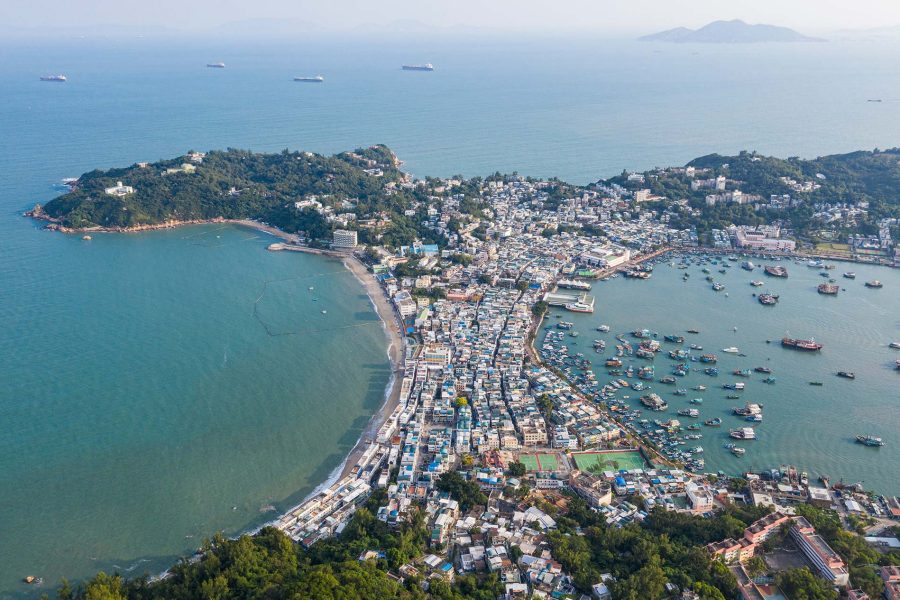
Hong Kong’s dumbbell-shaped outlying island Cheung Chau may be tiny at just 2.45 square kilometres, but it packs a ton of character for a day trip. Cheung Chau literally means ‘long island’, due to the distinctive central isthmus which is just over 100 metres wide at its narrowest point and is where most of the island’s 20,000 residents live.
Cheung Chau is easy to do as a day trip, but planning your time and transportation in advance helps you get more out of the trip. For both locals and visitors, there are many unspoiled corners and some hiking and cycling opportunities (note that these are the only transport options; the island is largely free of vehicles apart from small delivery trucks, police cars, downsized fire engines and ambulances).
Credit: Mike Pickles
Both ends of the Cheung Chau ‘dumbbell’ are gently hilly, but it’s one of Hong Kong’s flatter islands, with the highest point of just 95 metres; the northern end is the least populated. Cheung Chau is located just off the rugged Chi Ma Wan peninsula at the southeastern end of neighbouring Lantau Island, Hong Kong’s biggest, which is just a kilometre away at the closest point.
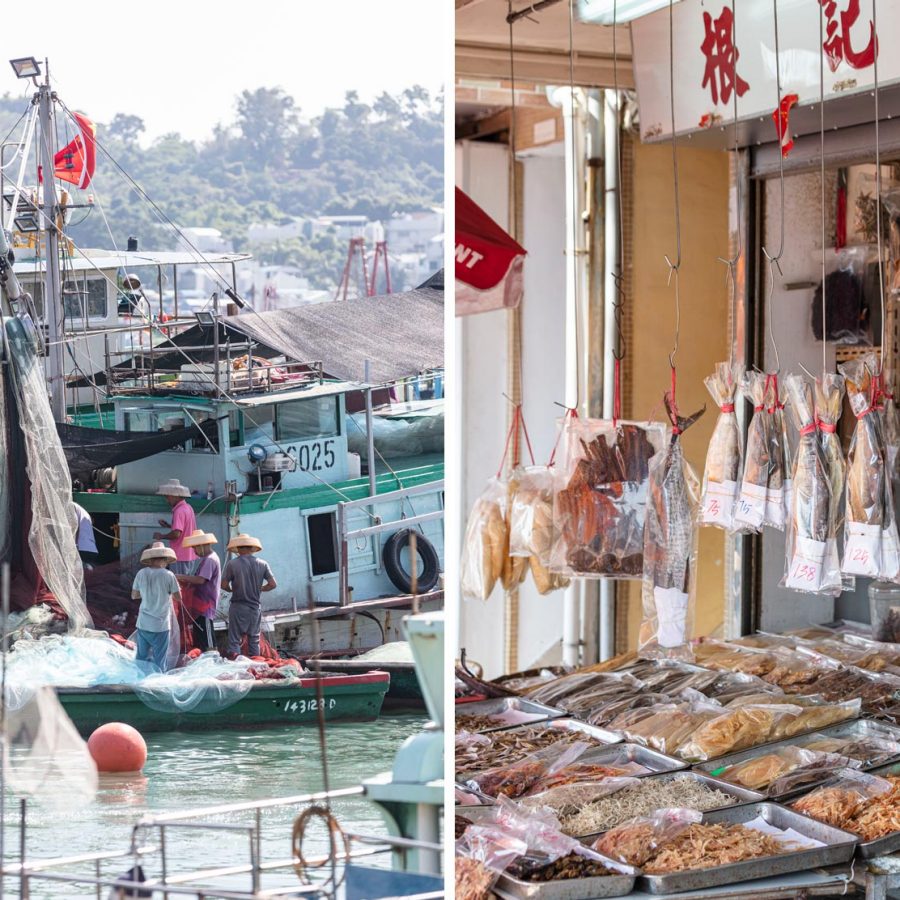
Cheung Chau has a less diverse population than other outlying islands such as Lantau, Lamma and Peng Chau, but enjoys a more traditional village culture. Like a lot of Hong Kong’s islands, it was originally a fishing community. While some commercial fishing still goes on these days, Cheung Chau is primarily a dormitory – albeit one that gets a lot of visitors, especially on weekends, holidays and major festival days.
Credit: Mike Pickles
How to get to Cheung Chau
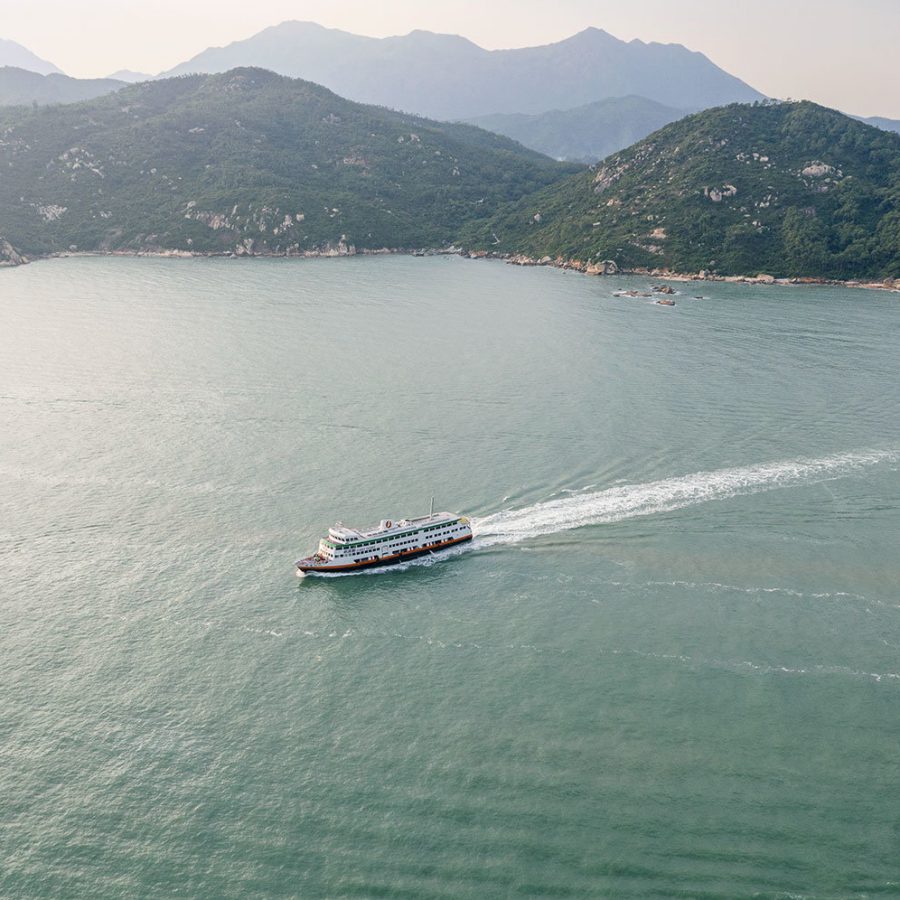
Most travellers take the Cheung Chau Ferry from Central Pier, and the two main Ferry Services are the Fast Ferry and the Ordinary Ferry. Unless you charter a junk for the day or join a sailing outing, the ferry is the only way to get to Cheung Chau. Ferries run from Central approximately every half an hour ; the Fast Ferry takes 35-40 minutes, while the Ordinary Ferry can take up to an hour. Check the Ferry Services Company website for routes, the latest schedule, and any Service updates before you travel, especially on weekends and public holidays.
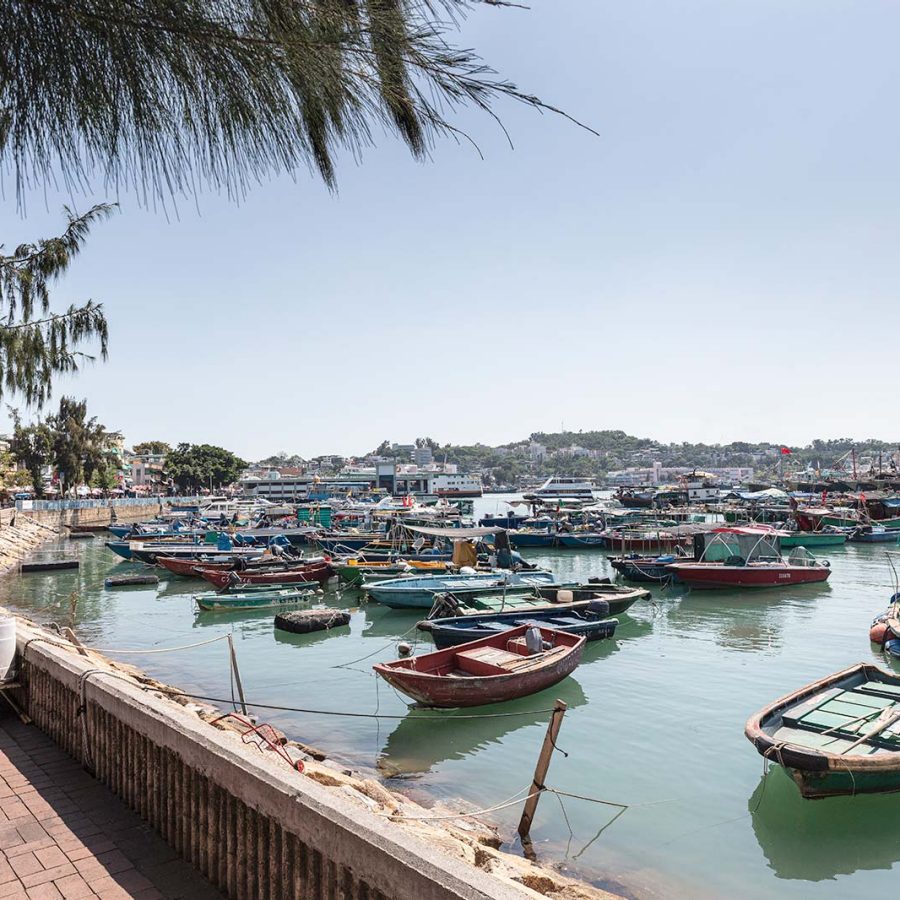
All ferries dock on the western side of Cheung Chau’s central isthmus, in a sheltered harbour where you’ll also find a sizeable flotilla of other boats. Follow signs from the Ferry Pier on arrival; the main waterfront is compact, so you can start your day within minutes.
A third option is the rather more basic inter-island kai to ferry, which serves Mui Wo and Chi Ma Wan on Lantau, as well as another island, the even smaller Peng Chau (less than one square kilometre, with a population of just 6,500), which is worth a visit for its traditional feel and the views from the 95-metre-high Finger Hill.
What to do on Cheung Chau
If you’re timing your visit around a festival, build your day around key events and leave extra time for crowds.
Credit: Mike Pickles
Go to the beach
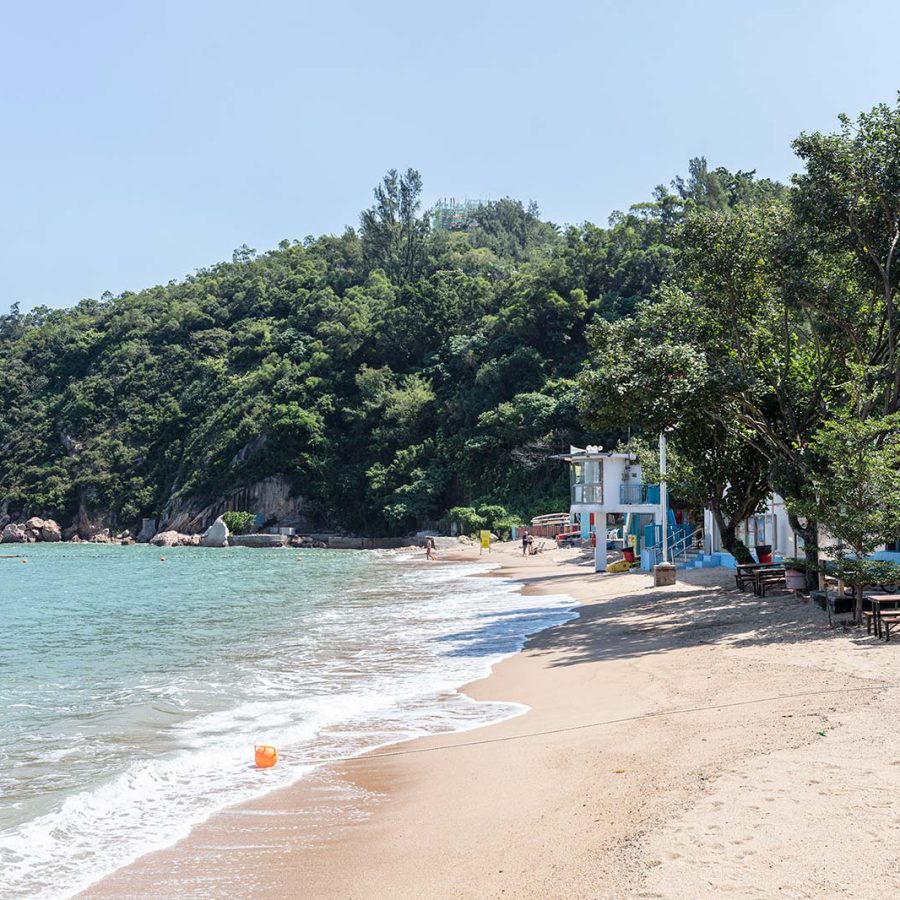
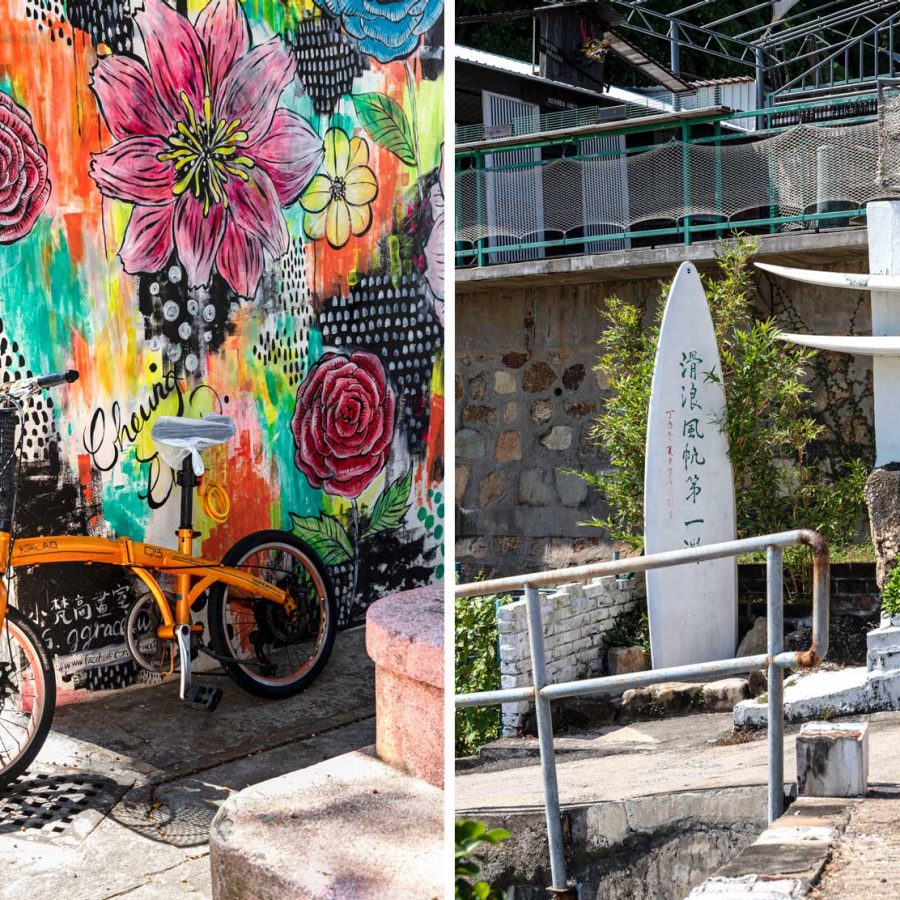
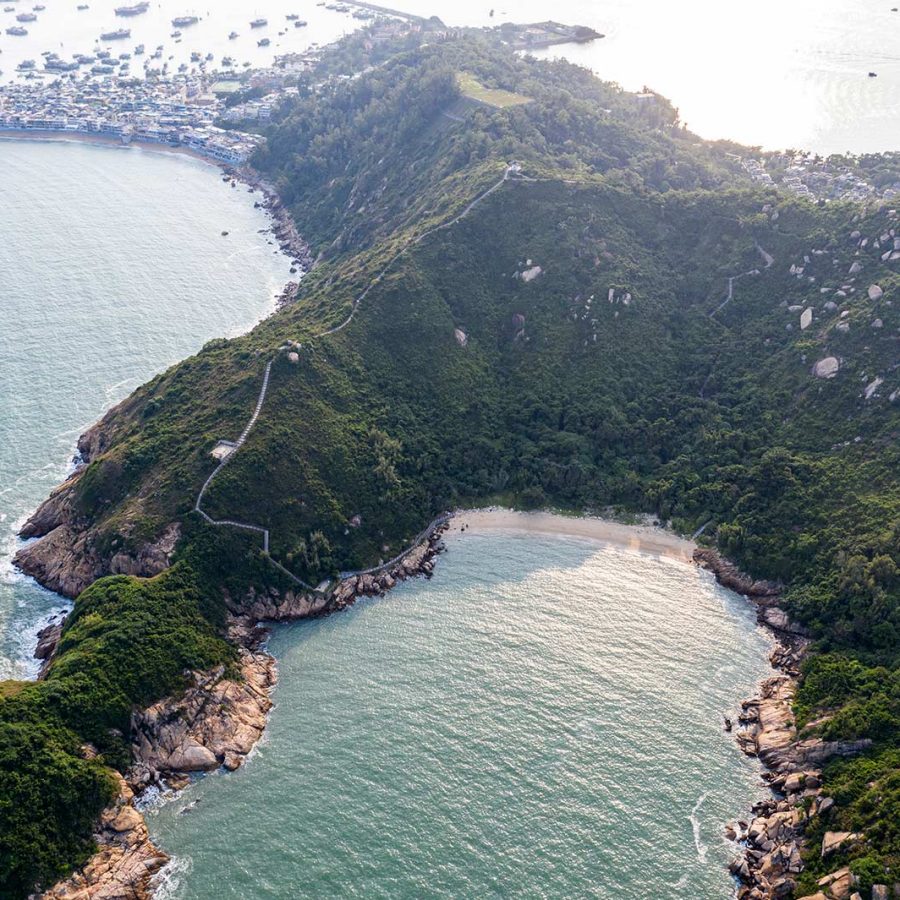
The biggest beach, Tung Wan Beach, is on the eastern side of the central isthmus. Its accessibility, just minutes from the pier, makes it extremely popular. Nearby is the equally pleasant Kwun Yam Wan beach; between the two, near the Warwick Hotel , are some 3,000-year-old rock carvings that were only discovered in 1970, housed inside a greenhouse-like protective structure. About 20 minutes’ walk away are remoter beaches: Tung Wan Tsai to the northeast and Tai Kwai Wan to the northwest.
Credit: Mike Pickles
If you fancy getting out on the water, Kwun Yam Wan’s Cheung Chau Windsurfing Centre will oblige; the island is also a solid spot for sailing when conditions are right: and it’s the birthplace of Lee Lai-shan, who bagged Hong Kong’s first Olympic gold in windsurfing– and its only one to date – at the 1996 Atlanta Games. Just remember to bring a swimsuit, towel, water sports gear (or buy or rent from nearby shops) – and an appetite.
Credit: Mike Pickles
Take a hike
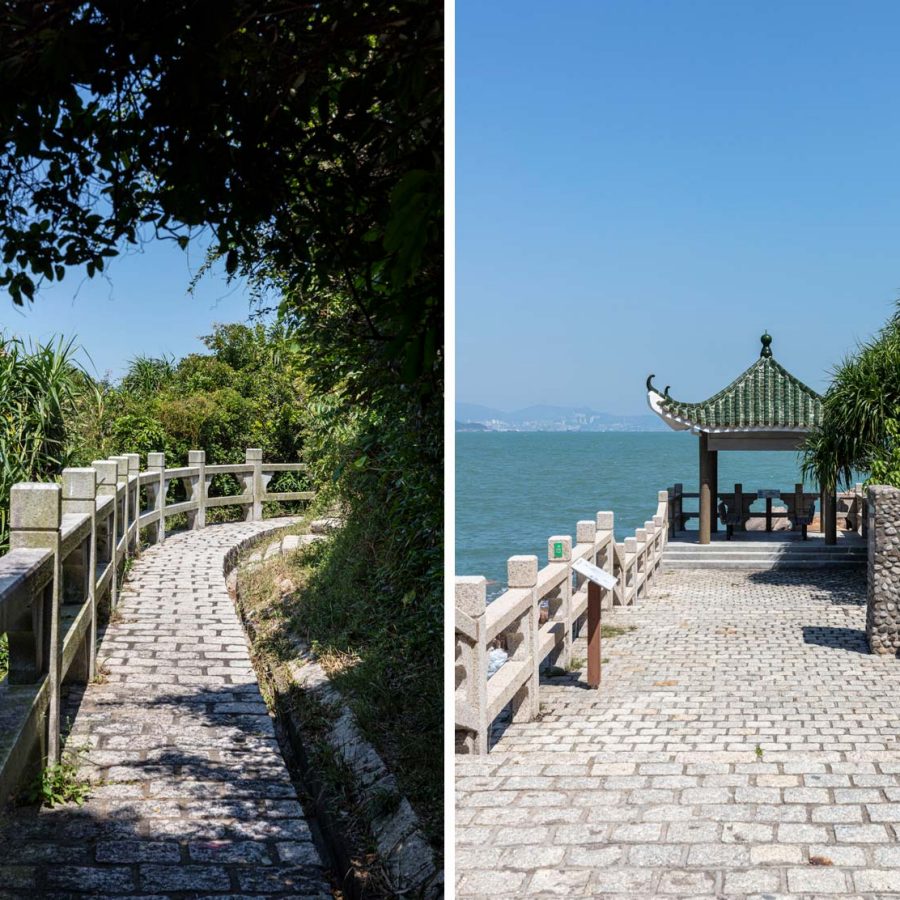
A simple loop hike also works well as a half-day plan: start after the ferry ride, follow the trail at a steady pace, then return for the beach and food. There are several hiking trails worth following, although gentle strolling trails might be a more appropriate name. The Cheung Chau Family Walk covers most of the main trails to the north and south; and there’s also the misleadingly named Cheung Chau Mini Great Wall in the south (well, the ‘mini’ and ‘wall’ parts are accurate), which passes various interesting rock formations. The other way to get around is by bike – several shops rent them out at reasonable prices.
Credit: Mike Pickles
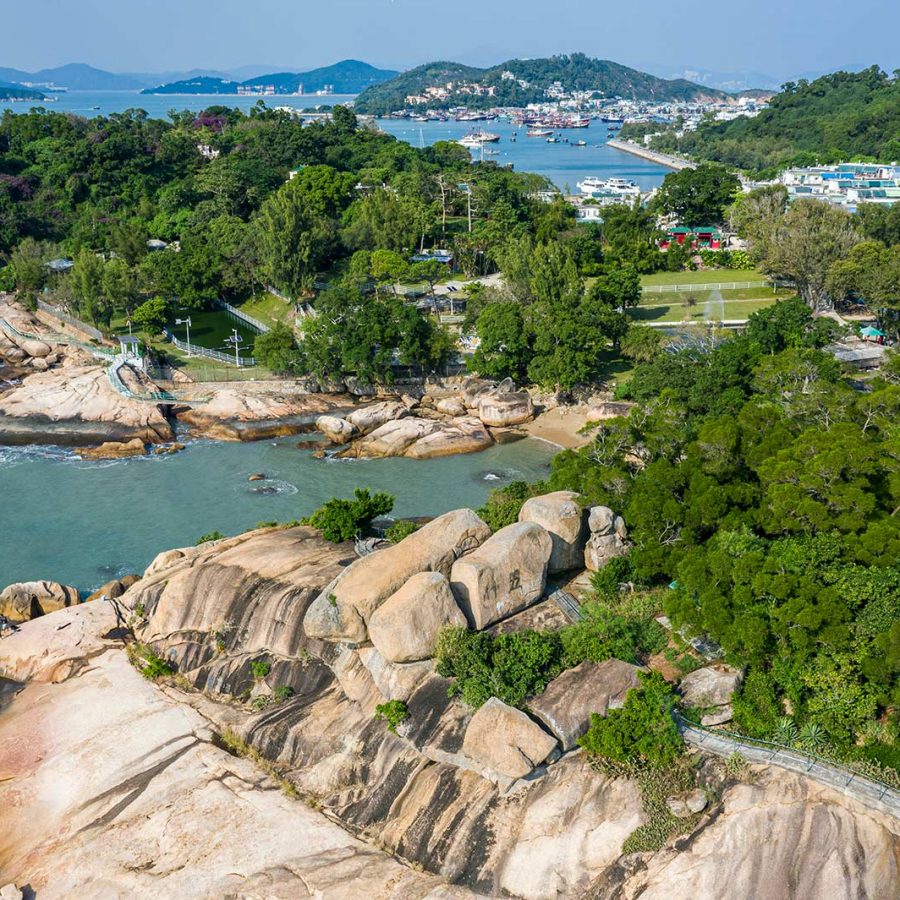
For a mild adrenaline rush, check out the pirate cave at the southwestern extremity of the island, supposedly the hiding place of Cheung Po-tsai , a legendary Qing dynasty pirate, and the best known of several similar caves dotted around Hong Kong’s outlying islands. Surprisingly long at 88 metres, the cave is accessed by ladders, is very dark inside and can get pretty slippery. Nearby, the Insta-worthy Reclining Rock is actually five giant, heavily eroded lumps of granite that look like they’re about to fall into the sea.
Credit: Mike Pickles
Tour a temple
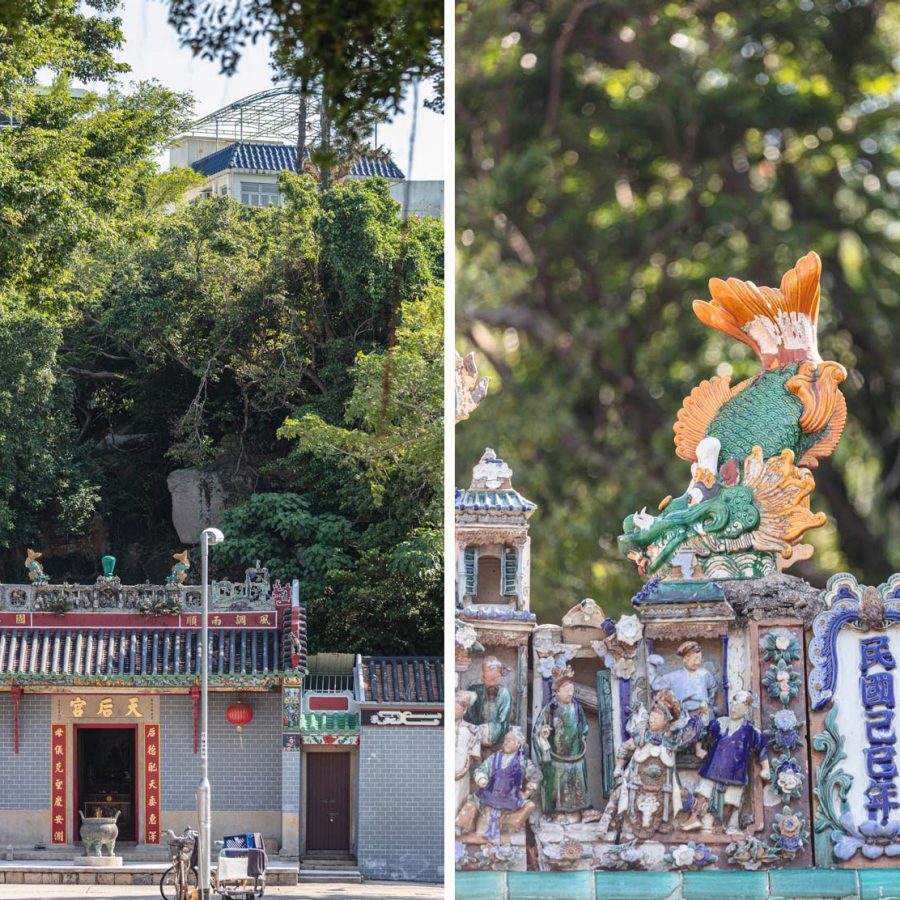
Cheung Chau is dotted with eight temples, half of them dedicated to Tin Hau, goddess of the sea, who is believed to protect seafarers. The most historic is Yuk Hui Temple, also known as the Pak Tai Temple . Originally built in 1783, after an outbreak of plague had ended following the arrival on the island of a statue of the sea god Pak Tai, it’s technically one of Hong Kong’s oldest, although it was rebuilt in 1989. It’s distinguished by some imposing architecture, including the four stone lions that guard its entrance, and cultural relics including an 800-year-old sword. Temples are busiest during major festival days, so visit earlier if you want a quieter experience.
Credit: Mike Pickles
Stay the night
Should you want to stay on Cheung Chau, there are several hotels – B&B is one of the most successful. Or try Saiyuen Camping Adventure Park at the southern end of the island, which sports safari tents, tree cocoons, gers, geodesic domes (with transparent roofs for stargazing) and teepees – you can also bring your own tent – as well as a variety of outdoorsy activities, from archery to abseiling.
Credit: Mike Pickles
Where to eat
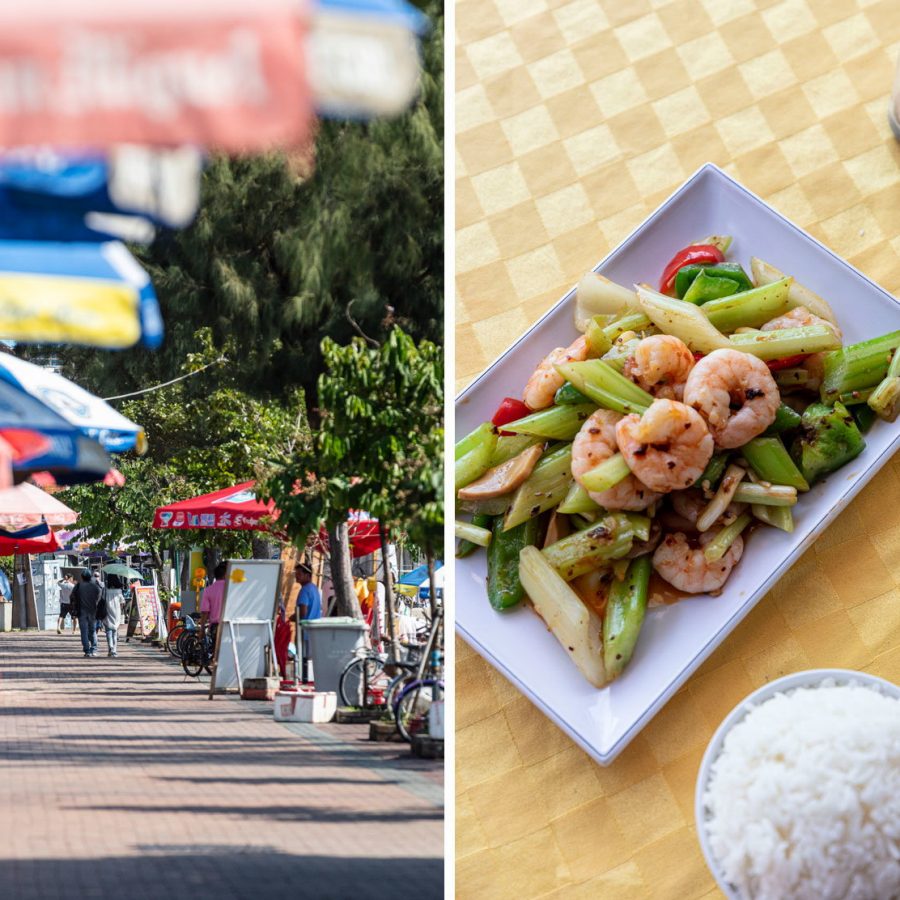
The island’s seafood restaurants are one of the main reasons to visit. Favourites include New Baccarat , Bayview at the Warwick Hotel and So Bor Kee , and many restaurants offer set menus that suit a quick day trip. For something different, try Indian restaurant Morocco’s. If you’re here for the Cheung Chau Bun Festival, you’ll also see versions packaged for souvenirs in some shops. Most restaurants, bars – and shops – won’t accept credit cards, so bring enough cash (there are two ATMs, both on the Praya or seafront for a short walk from the pier).
Credit: Mike Pickles
Where to shop
By far the most popular purchase is preserved seafood and sauces, in particular the pungent shrimp paste called ha zeong that’s used in local dishes. The ground floor of the market complex near the pier is a good source.
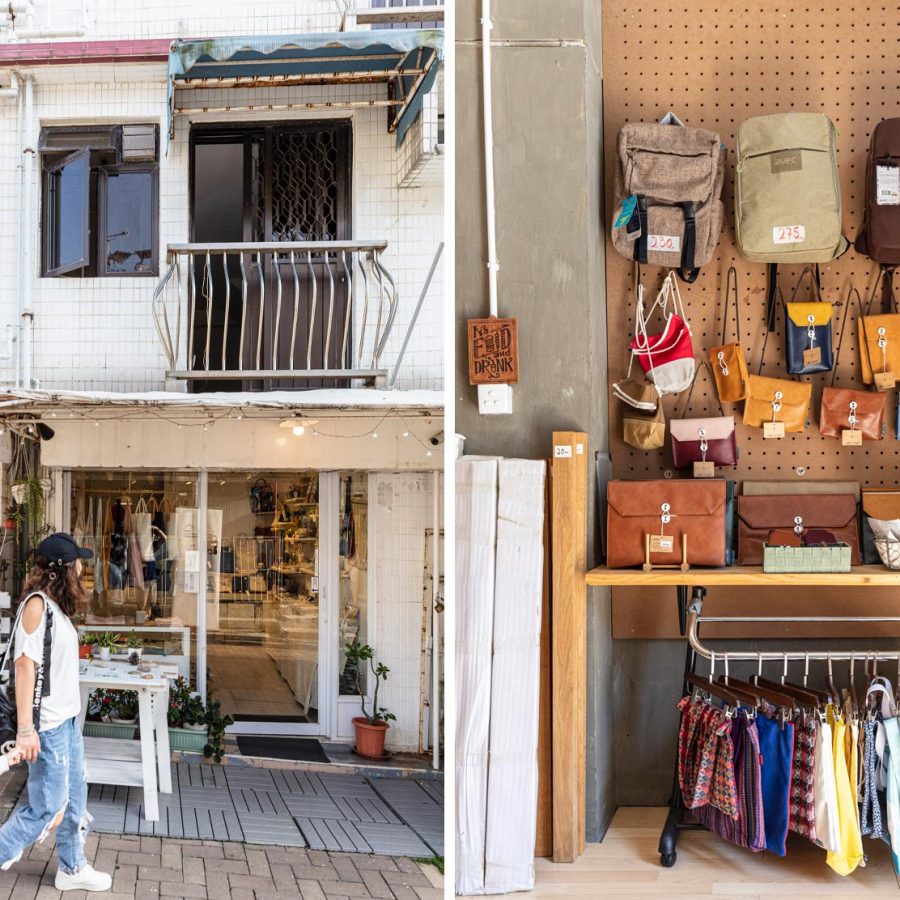
Boutiques such as MyArts and Island Workbench are tucked away on the backstreets but worth seeking out for their inventive artworks, jewellery and creations such as string bags made from recycled fishing nets.
Credit: Mike Pickles
Practical tips for visiting Cheung Chau
- Tickets are usually easy to buy at Central Pier, but it’s best to arrive early at peak festival times, pick up your ticket, and line up before the next departure
- It’s worth paying the extra for a deluxe seat on the slow ferry to Cheung Chau from Central: you get the choice of an air-conditioned cabin or an open-air deck at the stern with stellar views
- In October, the island (specifically Saiyuen Camping Adventure Park) plays host to the two-day music and arts festival Shi Fu Miz
- If you visit in April or May, you may catch the Cheung Chau Bun Festival , a quirky, locally flavoured affair. It dates back to rituals that were first used to ward off an 18th-century outbreak of plague
- There are two main events: a parade and a ‘bun fight’, both amazingly photogenic. Local heroes vie with each other to scramble up a 14-metre-tall bamboo tower and grab as many ‘lucky buns’ from the top as possible – traditionally they were real buns, but nowadays they’re plastic. This contest is the Bun Scrambling Competition, and it’s the signature Bun Festival event on the island
- And the stars of the cacophonous parade that winds its way through the streets are costumed children balanced atop long poles so they appear to be floating above the crowds
- During the festivals, shops including Kwok Kam Kee sell freshly baked buns stuffed with sesame, lotus or red bean paste and stamped with the character for ‘peace’ (or the shop’s logo). More than 60,000 buns are consumed every year and the entire island goes vegetarian for a month
This story was originally published in October 2019 and updated in April 2026.