How we fly: the million-dollar flight simulator that keeps Cathay Pacific pilots sharp

The sim. Two words that can cause even the most experienced pilot to feel the thrill of challenge. Flight simulators are where pilots learn and hone the skills needed to operate aircraft. They’re also where every Cathay Pacific pilot must regularly demonstrate those skills to remain qualified to fly.
Cathay Pacific maintains at least one simulator for every aircraft type in our fleet. These multimillion-dollar devices are mounted on actuators that replicate movement, while inside sits an exact replica of the flight deck. Beyond the flight deck windows, high-definition screens recreate the outside world with remarkable realism. Powerful computers enable examining pilots to generate an almost limitless range of scenarios, from different airports and altitudes to changing weather, turbulence and aircraft configurations.
Like most airlines, Cathay Pacific puts its pilots through simulator sessions four times a year. Two of these are biannual proficiency checks, or PCs, which satisfy regulatory requirements by assessing both technical knowledge and flying ability.

These four-hour sessions include multiple emergencies, creating what General Manager Operations Captain James Toye describes as “a challenging flight”. They may face an engine failure on take-off, a depressurisation or a problem on approach requiring a go-around. Such events are common in the simulator but incredibly rare in reality.
“Engines are so reliable that most pilots will not experience a failure in their career,” says Captain Toye. Nevertheless, both the airline and the regulator must be confident that pilots can respond correctly if the unexpected occurs.
“Flying is an unusual profession – you pretty much lose the licence that enables you to do your job every few months until you prove you’re worthy of retaining it,” adds Line Operations Manager Captain Tony Pringle.
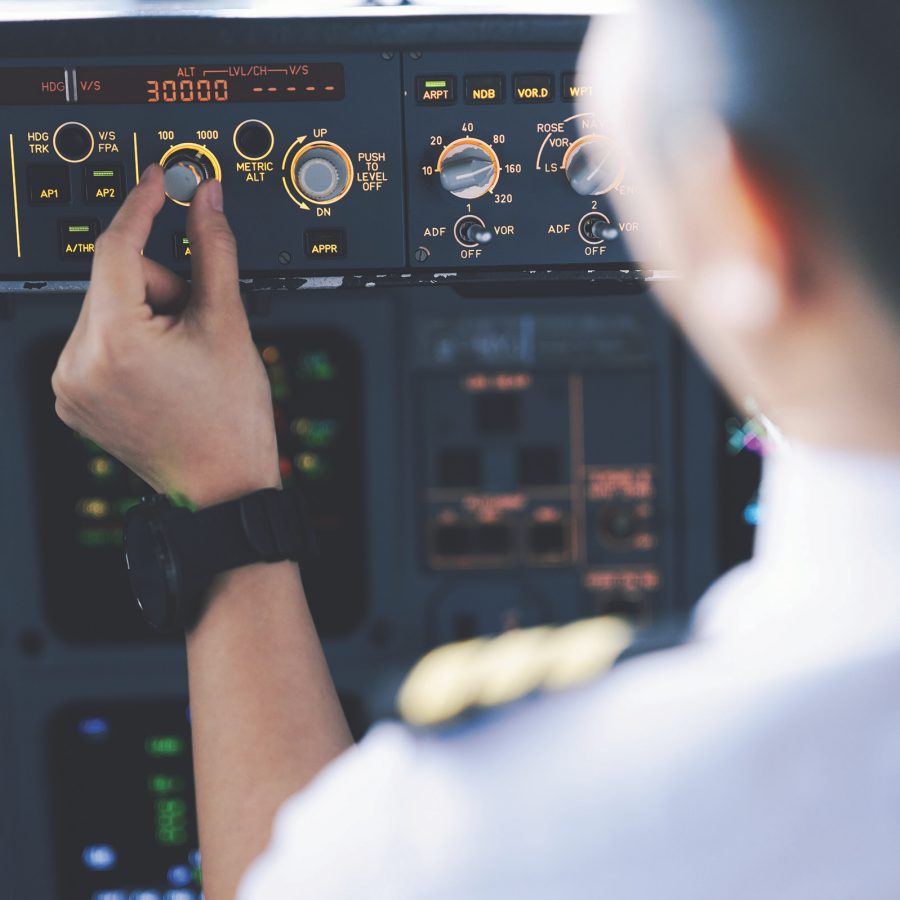
Both captains assess these sessions. “The air conditioning in there means we’re freezing in the back, but the crew are sweating under significant pressure,” says Captain Toye.
Yet the Cathay Pacific flight simulator is much more than an examination room. Away from regulatory checks, it’s one of our most valuable training tools. Many proficiency test scenarios require specific, prescribed responses, but other sessions allow pilots to explore unfamiliar airports, practise diversions or address trends identified through flight data, such as responses to certain weather conditions.
For pilots, the simulator is where learning never stops. For passengers, it’s one of the invisible systems that helps ensure every flight is operated to the highest standards of skill, preparedness and safety.